Quartz vs. Granite vs. Marble Countertops: How to Choose
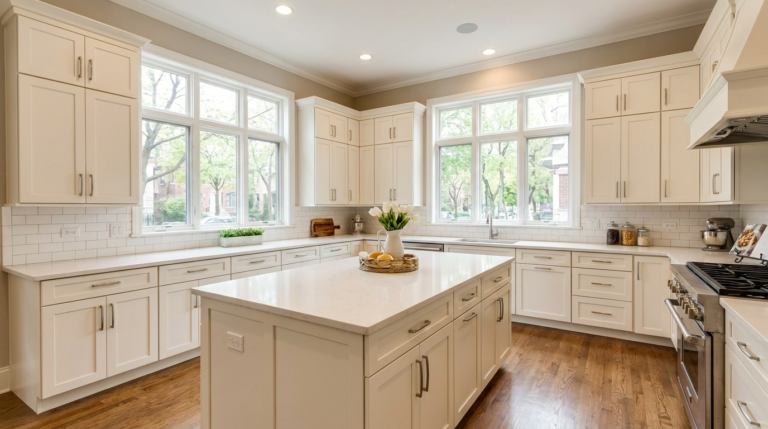
Few decisions shape a kitchen renovation as much as the countertop. When homeowners across Chicago compare their options, the conversation almost always comes down to three materials: quartz, granite, and marble. Each brings a different mix of durability, maintenance, and style to your kitchen countertops, and the right pick depends on how you cook, how you clean, and the look you’re after. This guide walks through what sets these surfaces apart so you can choose with confidence.
Quartz Countertops: Engineered for Low Maintenance
Quartz is an engineered stone, made from roughly 90% ground natural quartz blended with resins and pigments. That manufacturing process is exactly what makes it so popular in busy kitchens. Because the surface is non-porous, quartz never needs sealing, resists staining from wine, coffee, and oil, and wipes clean with nothing more than mild soap and water. For families who want a worry-free, consistent surface, it’s often the default pick.
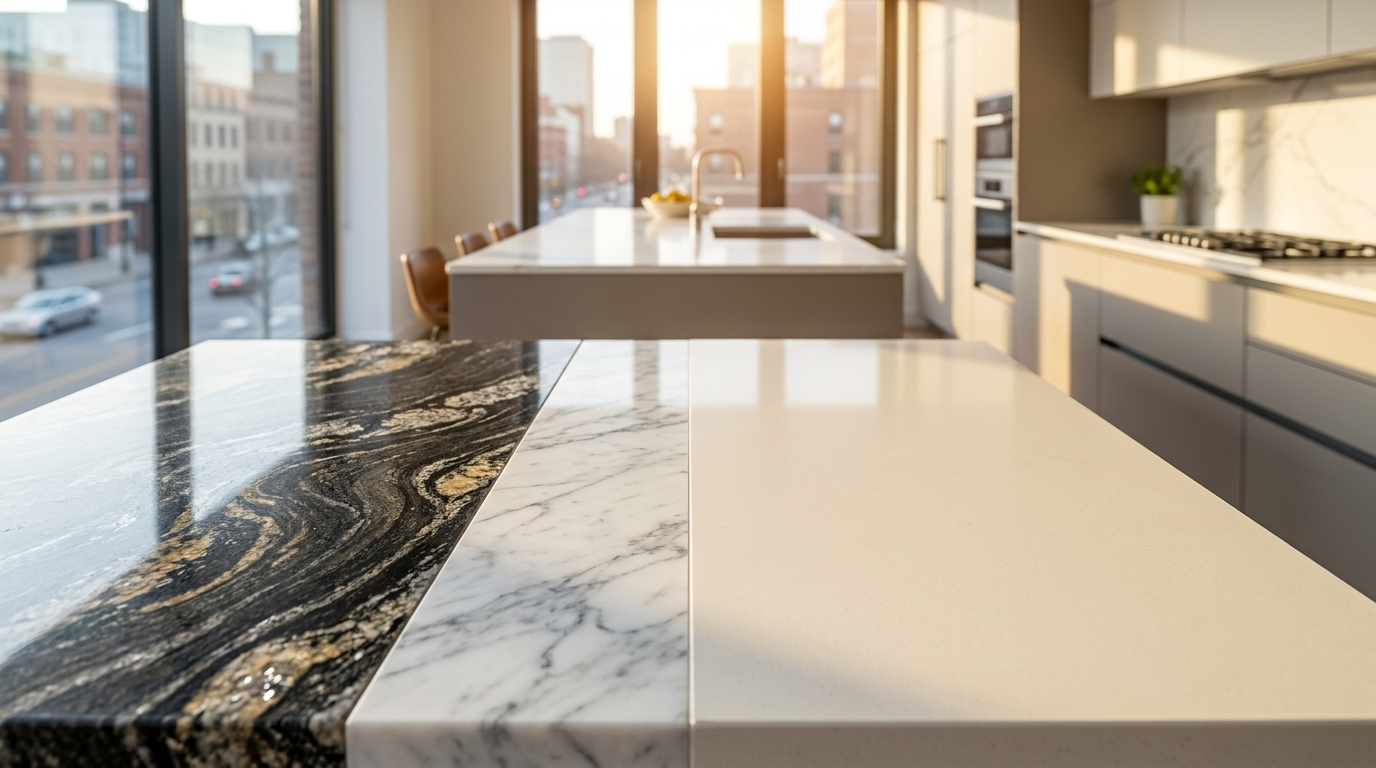
There are trade-offs worth knowing. Quartz is sensitive to high heat, so trivets and hot pads are a must, and prolonged direct sunlight may fade some colors over the years. On design, though, it’s hard to beat: quartz comes in a huge range of consistent colors and patterns, including convincing marble looks without marble’s upkeep. We fabricate and install engineered kitchen countertops alongside natural stone, so you can compare real samples side by side.
Granite Countertops: Natural Stone That Lasts
Granite is 100% natural stone, quarried and cut into slabs, which means no two pieces are exactly alike – a big part of its appeal for homeowners who want something one of a kind. It is exceptionally hard and genuinely heat-resistant, shrugging off hot pans and everyday use better than most surfaces. Its natural flecks and movement give a kitchen warmth and character that engineered materials work hard to imitate.
The main thing to plan for is sealing. Because granite is porous, it needs a sealer applied periodically – often about once a year, though it varies by stone – to guard against stains from oil and liquids. That upkeep is quick and easy once you know the routine, and keeping the seal fresh is the key to a granite top that looks great for decades. Our guide to natural stone care and maintenance covers exactly how to keep it protected.
Marble Countertops: Timeless Elegance
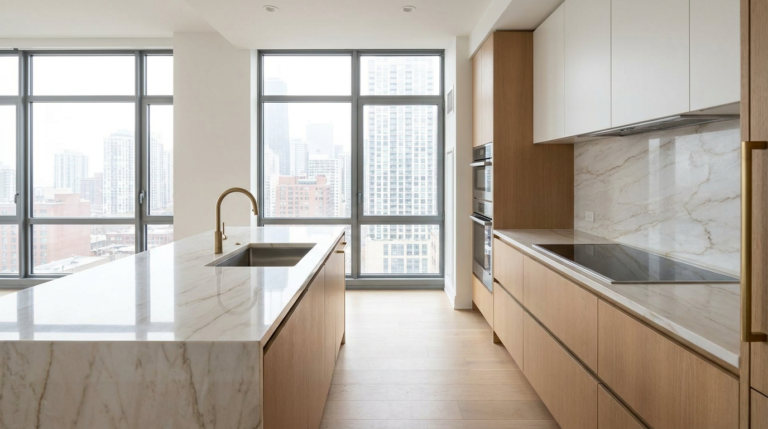
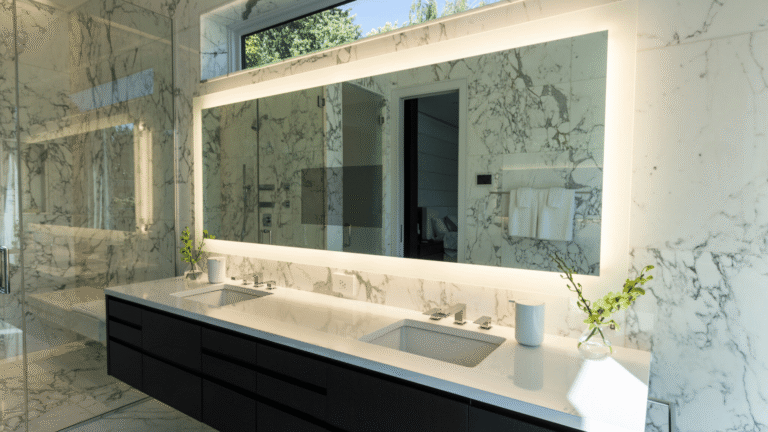
Marble is the material designers reach for when they want unmistakable luxury. Its soft, luminous veining – think classic Carrara or Calacatta – brings a level of elegance no other stone quite matches, which is why it anchors so many high-end Chicago kitchens and baking stations. If your priority is a showpiece surface, marble delivers.
It does ask more of you in return. Marble is softer and more porous than granite or quartz, so it can scratch, and it etches when it meets acidic foods like lemon juice, wine, or vinegar. Many homeowners embrace the way marble develops a lived-in patina over time; others prefer it in lower-traffic spots such as an island or a coffee bar. With honest expectations and consistent sealing, marble rewards you with a look that never goes out of style.
Quartz vs. Granite vs. Marble: Side by Side
Every material has a sweet spot. This quick comparison sums up how the three stack up on the factors homeowners ask about most:
| Feature | Quartz | Granite | Marble |
|---|---|---|---|
| Material | Engineered stone | 100% natural stone | 100% natural stone |
| Durability | Very high | Very high | Moderate (softer) |
| Heat resistance | Moderate – use trivets | Excellent | Good, but can mark |
| Sealing | Never needed | Periodic (about yearly) | Regular sealing advised |
| Stain resistance | Excellent | Good when sealed | Lower – etches with acids |
| Look | Consistent, many patterns | Unique, natural variation | Luxurious veining |
| Best for | Busy, low-maintenance kitchens | Hardworking natural-stone lovers | Showpiece and baking areas |
How to Choose the Right Countertop for Your Kitchen
Start with how you actually use your kitchen. If you cook constantly, have young kids, or simply want to forget about upkeep, quartz’s non-porous, no-seal surface is tough to beat. If you love natural stone and don’t mind occasional sealing, granite gives you unmatched heat resistance and a one-of-a-kind slab. If a statement look matters most and you’re comfortable with a little patina, marble brings elegance nothing else can copy.
Budget, edge profiles, slab availability, and how the color works with your cabinets and floors all factor in too. Because slab pricing, square footage, and fabrication needs differ from one kitchen to the next, pricing is individual and depends on scope – the most accurate way to plan is a personalized quote. Seeing full slabs in person is also invaluable, since a small sample rarely captures a stone’s full movement. If you’re planning a broader refresh, our kitchen design and remodeling team can help tie the countertop into the whole room.
FAQ
Which countertop material is the most durable?
Quartz and granite are both extremely durable and stand up well to daily use. Quartz wins on being non-porous and maintenance-free, while granite leads on heat resistance. Marble is beautiful but softer, so it’s the most prone to scratching and etching of the three.
Do quartz countertops need to be sealed?
No. Because quartz is engineered and non-porous, it never needs sealing – a key reason it’s such a low-maintenance choice. Granite and marble, being natural and porous, do benefit from periodic sealing.
Is marble a bad choice for a kitchen?
Not at all – it just asks for realistic expectations. Marble can etch and scratch more easily than quartz or granite, but with regular sealing and a little care it remains a stunning, timeless surface. Many homeowners use it on an island or baking area to enjoy the look while limiting heavy wear.
How much do new kitchen countertops cost?
There’s no single price, because cost depends on the material, slab, square footage, edge details, and fabrication involved. Every kitchen is quoted individually, so the best step is to request a personalized quote based on your space and the stone you love.
Get a Free Quote
Still deciding between quartz, granite, and marble? Our Chicago team will help you compare real slabs, weigh the maintenance and budget trade-offs, and match the right surface to the way you live. Because every kitchen is different, we’ll prepare a personalized quote built around your space – no fixed-price guesswork. Reach out today for a free, no-pressure consultation and let’s find the perfect countertop for your home.