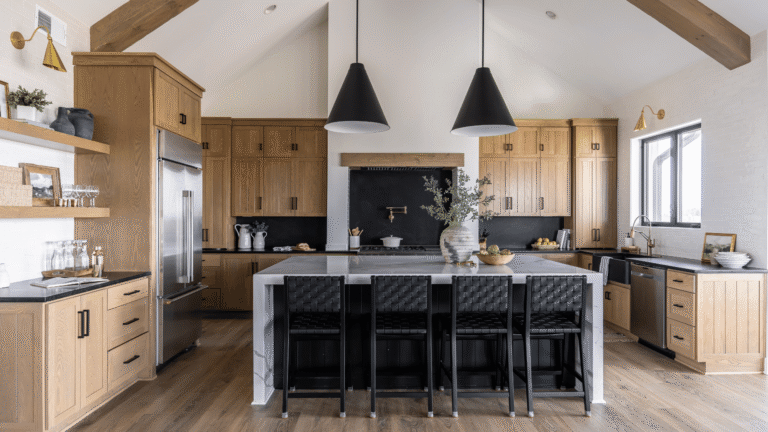
Kitchen Remodel Cost in Chicago: What Influences a High-End Investment
A kitchen renovation can either be treated as a necessary update — or as a strategic decision that reshapes how a home performs, feels, and holds its value over time. For homeowners who approach their properties with long-term vision, the question of kitchen remodel cost is rarely about immediate numbers. It is about understanding what drives a true high-end investment and why certain kitchens continue to deliver value long after completion.
In premium residences, the kitchen functions as an operational core. It supports daily routines, social gatherings, and architectural continuity. When thoughtfully executed, it becomes a space where design intelligence meets structural discipline. The cost of remodeling at this level is influenced not by isolated upgrades, but by a layered combination of planning, materials, technical infrastructure, and execution quality.
Strategic Planning Before Construction Begins
High-end kitchen remodeling begins long before demolition. The most significant cost drivers are often embedded in decisions made at the planning stage. Spatial analysis, circulation mapping, lighting studies, and appliance integration strategies all shape the final investment.
Rather than adapting a standard layout, luxury projects frequently require customized reconfiguration. Walls may be repositioned, load-bearing structures reinforced, and mechanical systems upgraded to accommodate contemporary design goals. These structural refinements are not cosmetic enhancements; they redefine how the kitchen interacts with the rest of the home.
When planning is approached with architectural rigor, it reduces the risk of costly modifications later. Discipline at this stage protects both financial resources and design integrity.
Material Quality and Long-Term Performance
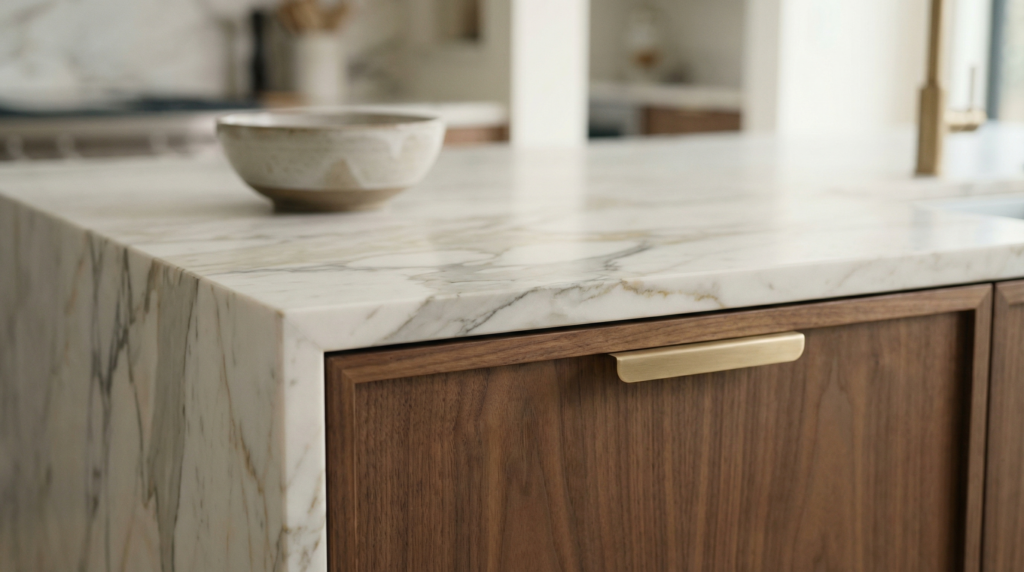
Material selection is another central factor influencing kitchen remodel cost in high-end homes. Premium cabinetry systems, reinforced joinery, engineered hardware, and advanced surface materials are selected not merely for appearance, but for resilience under sustained use.
Luxury kitchens are expected to perform under constant activity without visible degradation. Countertops must resist impact and staining. Cabinetry must maintain alignment and smooth operation over years of opening and closing. Flooring must withstand weight, moisture exposure, and temperature fluctuations.
Behind visible finishes, substructures and moisture protection systems play an equally important role. Durable construction prevents expansion, warping, and premature wear — issues that often surface in projects built to lower standards.
At this level, material investment is inseparable from longevity.
Technical Infrastructure and System Integration
Modern high-end kitchens rely heavily on integrated systems. Electrical capacity must support advanced appliances. Ventilation must be engineered to maintain air quality without compromising design aesthetics. Plumbing layouts often require upgrades to ensure reliability and efficiency.
These hidden systems frequently account for a substantial portion of the overall investment. While they are not immediately visible, they determine how seamlessly the kitchen operates. Poor coordination between structural, electrical, and plumbing components can limit performance and increase future repair costs.
Professional remodeling teams anticipate these requirements and engineer solutions that align with both current needs and future flexibility. The result is a kitchen that remains adaptable as technology and lifestyle expectations evolve.
Craftsmanship and Installation Discipline
Even the most carefully designed kitchen depends on execution. Installation precision directly influences both appearance and durability. Cabinet alignment, surface leveling, appliance integration, and finishing transitions must be executed with meticulous attention.
High-end projects demand skilled trades who understand tolerances, structural reinforcement, and the importance of concealed details. Small inconsistencies in alignment or sealing can gradually compromise performance. In contrast, disciplined craftsmanship ensures that doors operate smoothly, surfaces remain stable, and materials age gracefully.
This level of precision does not accelerate timelines, but it protects long-term value.
Project Management and Risk Control
Kitchen remodeling at a premium level involves coordination across multiple disciplines. Designers, contractors, engineers, and suppliers must operate within a unified framework. Without structured project management, complexity can quickly escalate into delays or budget instability.
A refined remodeling process incorporates phased scheduling, transparent communication, and proactive risk mitigation. Every stage — from procurement to inspection — is monitored to maintain alignment with both technical specifications and design goals.
Effective management reduces uncertainty and allows homeowners to remain confident throughout the project. In high-value homes, peace of mind is an essential component of the investment.
Long-Term Value and Market Positioning
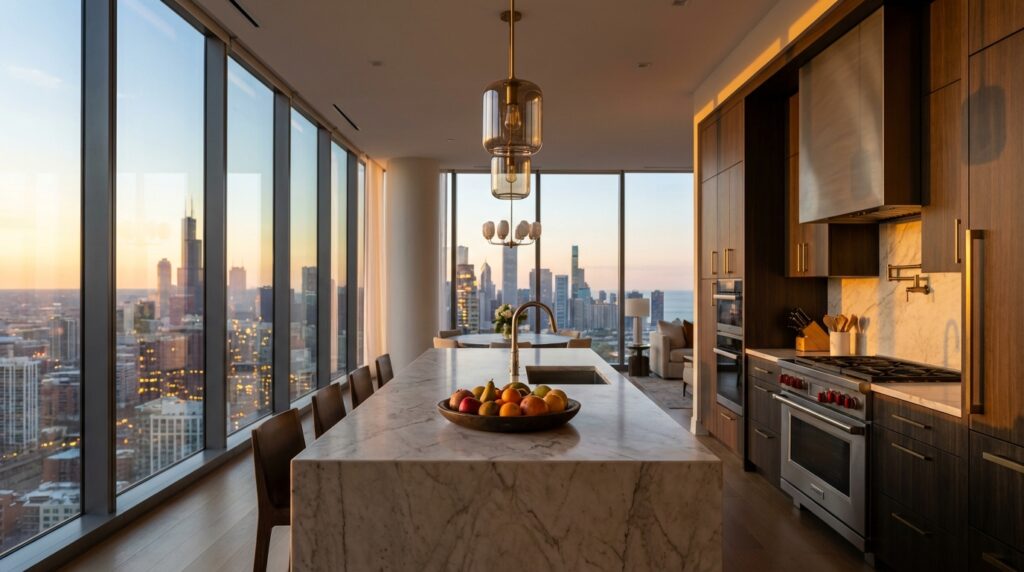
Beyond functional improvements, a luxury kitchen remodel strengthens a property’s market positioning. Buyers in Chicago’s premium real estate sector consistently evaluate kitchens as indicators of overall quality. Craftsmanship, layout intelligence, and material integrity communicate whether a home has been maintained with intention.
When remodeling decisions are guided by durability and architectural coherence, the kitchen continues to support property value long after installation. In this context, cost becomes a measure of strategic allocation rather than expenditure.
A well-executed remodel does not simply enhance daily comfort; it reinforces the home’s long-term performance and desirability.
Final Perspective
Kitchen remodel cost in high-end Chicago homes is shaped by a convergence of architectural planning, material integrity, system engineering, craftsmanship, and disciplined management. Each component contributes to durability, operational efficiency, and enduring aesthetic balance.
For homeowners who value refinement and long-term security, remodeling is not about reducing scope. It is about aligning investment with standards.
A private consultation provides the opportunity to evaluate how thoughtful design and precision execution can transform a kitchen into a lasting asset — one that performs as beautifully as it appears for years to come.