Kitchen Cabinet Refacing vs. Replacing: Which Is Right for You?
If you love your kitchen’s layout but the doors and drawer fronts feel tired, you have a real choice to make: get your kitchen cabinets refaced for a fresh look at a fraction of the cost, or tear everything out and start over with brand-new boxes. Both paths lead to a beautiful Chicago kitchen – but they differ dramatically in price, timeline, disruption, and what you can change along the way. Picking the right one saves thousands of dollars and weeks of headache.
This guide walks through what refacing actually is, when full replacement makes more sense, how the two options compare on cost and timeline, and a simple framework to help you decide which is right for your home.
What “Refacing” Really Means (And What It Doesn’t)
Cabinet refacing keeps the existing cabinet boxes – the structural parts screwed to your walls – and replaces only the visible surfaces. That means new door and drawer fronts, new hardware, and a fresh veneer or paintable finish on the exposed sides and face frames. When it’s done well, the result looks like a brand-new kitchen. Nobody can tell the boxes are the same ones you’ve been using for years.
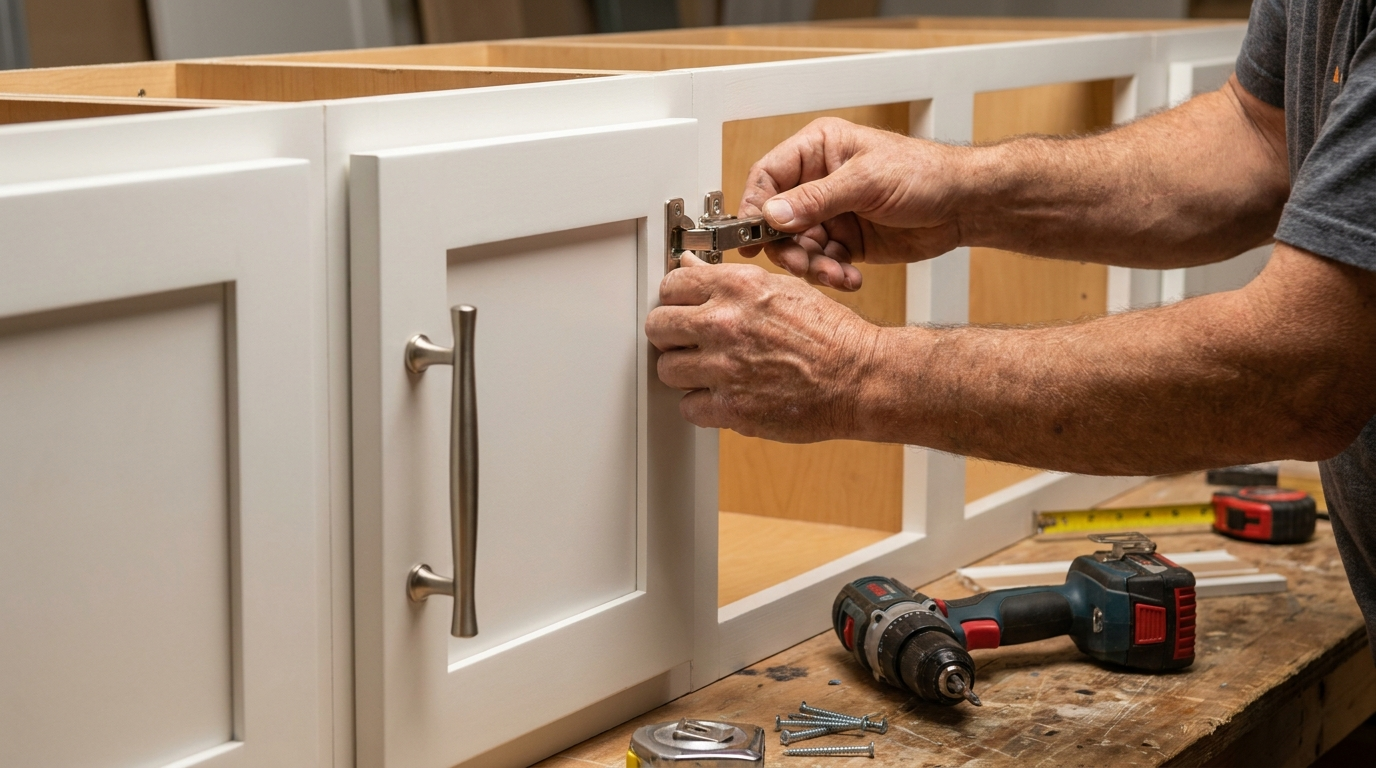
What refacing does not do: it doesn’t move a wall, relocate the sink, add an island, or change the footprint of your kitchen. If your current layout works and the boxes are structurally sound – no water damage, no sagging shelves, no delamination – refacing is often the smartest way to modernize. Common upgrades bundled with refacing include soft-close hinges, new pulls, under-cabinet lighting, and even swapping open shelves for glass-front doors.
Refacing is not the same as refinishing. Refinishing means sanding and repainting the doors you already have; refacing means installing new door and drawer components on top of the existing framework. Refinishing is cheaper but limited to whatever style your current doors already have – refacing lets you completely change the door style, wood species, and finish.
When Cabinet Replacement Is the Better Move
Full replacement is the right call when the boxes themselves are the problem, or when the kitchen layout no longer fits how you live. A few clear signs it’s time to replace:
- Cabinet boxes are water-damaged, warped, or coming apart at the joints.
- Shelves sag under normal loads, or hinges keep pulling out of soft particleboard.
- You want to change the kitchen layout – move the sink, add an island, extend the run of cabinets, or open a wall.
- You’re switching from standard-depth uppers to something taller (like ceiling-height cabinets) or want completely different storage systems inside.
- Refaced boxes wouldn’t hold new appliances (for example, converting standard uppers to accommodate a large hood or an integrated refrigerator).
Replacement is also the smarter investment when you’re already remodeling the whole space – new floors, new appliances, new countertops, new lighting. If demolition is happening anyway, tacking on new cabinets rarely costs much more in disruption than refacing would have. And starting fresh means every dimension, every drawer, and every storage system can be optimized for your family instead of inherited from whoever picked out the old ones.
Cost, Timeline, and Disruption – The Real Trade-Offs
The most tangible difference between refacing and replacement shows up on your quote and your calendar. Refacing typically runs a fraction of the cost of full replacement because you’re paying for doors, fronts, veneers, and installation labor rather than for new boxes, demolition, disposal, and the extended labor that comes with them. That said, actual pricing is individual and depends on the door style you pick, the wood species, how many cabinets you have, and whether you’re bundling hardware, lighting, or interior upgrades. Request a personalized quote for an accurate number for your kitchen.
Timelines diverge just as much. A straightforward refacing job usually wraps up in a few days to about a week, and you keep using most of your kitchen while it happens. Full replacement, when combined with countertop and backsplash work, tends to run several weeks – sometimes longer if plumbing or electrical needs to move. During a full replacement your kitchen is out of service, so plan a temporary setup (microwave, kettle, mini-fridge) somewhere else in the house.
There’s also a sustainability angle: refacing keeps a whole set of cabinets out of a Chicago landfill and cuts down on the materials, transport, and finishing chemicals that go into a full replacement. If your boxes are solid, that’s an advantage worth naming.
A Decision Framework for Chicago Homeowners
Not sure which side you fall on? Run through these five questions before you talk to a contractor. Your answers will make the choice obvious.
- Are the cabinet boxes structurally sound? Open a few doors, check the corners, look under the sink for water damage. Solid boxes are the entry ticket for refacing.
- Do I want to change the layout? Any yes here – even a small one like moving the microwave – usually pushes toward replacement.
- How much am I willing to spend? If your budget can’t comfortably absorb full replacement plus countertops and appliances, refacing frees up cash for other upgrades that show more.
- How disruptive can the project be? If you’re working from home, hosting for the holidays, or have small kids, the shorter refacing timeline is a real quality-of-life win.
- How long am I staying in the home? If you’re selling within a year or two, refacing often gives you a better return on investment. If this is your forever kitchen, replacement lets you tailor everything.
A lot of Chicago homeowners are pleasantly surprised to discover their 15-to-25-year-old cabinets have plenty of life left in the boxes. Solid-wood or well-built plywood construction from that era often holds up beautifully – it’s the doors, the finish, and the hardware that date the kitchen. That’s exactly the situation refacing was built for.
Getting the Most From Either Path
Whichever route you take, a few decisions pay off out of proportion to their cost. Pick a door style that will still look current in ten years – classic Shaker, clean flat-panel, and simple raised-panel doors all age well. Splurge on hardware; pulls and knobs are the jewelry of the kitchen and cost very little compared to the rest of the project. Add soft-close hinges and drawer glides if you don’t have them; they’re a small upgrade with a big daily payoff.
Think about lighting too. Under-cabinet LED strips make refaced or replaced cabinets look higher-end and dramatically improve how you actually use the counter. Don’t skip the toe-kick vents if you have a range next to a cabinet run – they help the space feel finished. And if you’re replacing, plan the interior storage – roll-out trays, dividers, pull-out trash – before you finalize the box order, not after.
If you’re still on the fence, walk your kitchen with a contractor who does both refacing and full remodels. A good pro will tell you honestly which route serves your goals better – not just which one earns them more revenue. If you want a broader look at what Chicago kitchen projects involve, our kitchen design and remodeling service page walks through the full process, and our blog on what to know before remodeling your kitchen covers the lessons homeowners most often share after they’re done.
FAQ
Is refacing worth it if my cabinets are older than 20 years?
Often yes, as long as the boxes are structurally sound. Cabinets built in the ’90s and early 2000s from solid wood or high-grade plywood usually have plenty of life left; it’s the doors, finish, and hardware that make them look dated. A quick in-home inspection will confirm whether refacing is a good fit or replacement makes more sense.
How much can I save by having kitchen cabinets refaced instead of replaced?
Refacing typically costs a fraction of full replacement because you’re not paying for new boxes, demolition, or disposal. The exact savings depend on door style, materials, and scope, so ask for a personalized quote – but many Chicago homeowners find refacing frees up enough budget to upgrade countertops, backsplash, or appliances in the same project.
Can I change my kitchen layout with refacing?
No – refacing keeps the existing boxes exactly where they are. If you want to move the sink, add an island, or reconfigure the run of cabinets, you’ll need replacement. Refacing shines when the layout already works and you just want the kitchen to look and feel new.
Do refaced kitchen cabinets last as long as new ones?
Yes, when the original boxes are in good shape and the reface is done with quality doors and hardware. The doors, hinges, and pulls are new, and the boxes have already proven their durability by lasting this long. Expect a refaced kitchen to look great for many years with normal care.
Get a Free Quote
Whether you’re leaning toward getting your kitchen cabinets refaced or planning a full replacement, the smartest first step is a real conversation about your kitchen – not a fixed-price guess. Our team walks the space with you, checks the boxes, talks through your layout goals, and puts together a personalized quote based on the exact scope. Reach out today for a free consultation and let’s figure out the right path for your Chicago home.