Kitchen Backsplash Tile Guide: Materials, Styles & Installation
Few surfaces work as hard as the wall between your countertop and your upper cabinets. It catches splatter from the range, steam from the sink, and every bit of light bouncing around the room — and it is usually the first thing a guest notices when they walk in. Choosing the right kitchen backsplash tile is one of the highest-impact decisions in a Chicago kitchen project, and one of the few places where a relatively small area can completely change how the whole room reads.
This guide walks through the materials worth considering, the layouts that define a style, the practical questions homeowners tend to ask too late, and what actually happens during installation. No fixed prices here — every kitchen has a different wall, a different layout and a different set of goals, so pricing is always individual. What you will get is enough context to walk into a design conversation knowing what you want and why.
Why the Backsplash Matters More Than Its Square Footage Suggests
A typical backsplash covers a modest amount of wall, but it sits at eye level in the busiest room in the house. That gives it outsized visual weight. It is also the functional barrier that keeps water, oil and food off drywall — a genuine concern in older Chicago homes and vintage two-flats where original plaster behind a sink has often been patched more than once.
Because the area is small relative to floors or countertops, it is also the one place where an upgrade in material does not carry the same cost consequences it would elsewhere. A statement tile you could never justify across a whole floor becomes reasonable across a few dozen square feet. That is why designers often treat the backsplash as the “budget splurge” of a kitchen — the detail that makes an otherwise straightforward remodel feel custom.
Backsplash Tile Materials: Ceramic, Porcelain, Glass and Natural Stone
Most kitchen backsplash tile falls into four broad families, each with a different personality and a different maintenance profile.
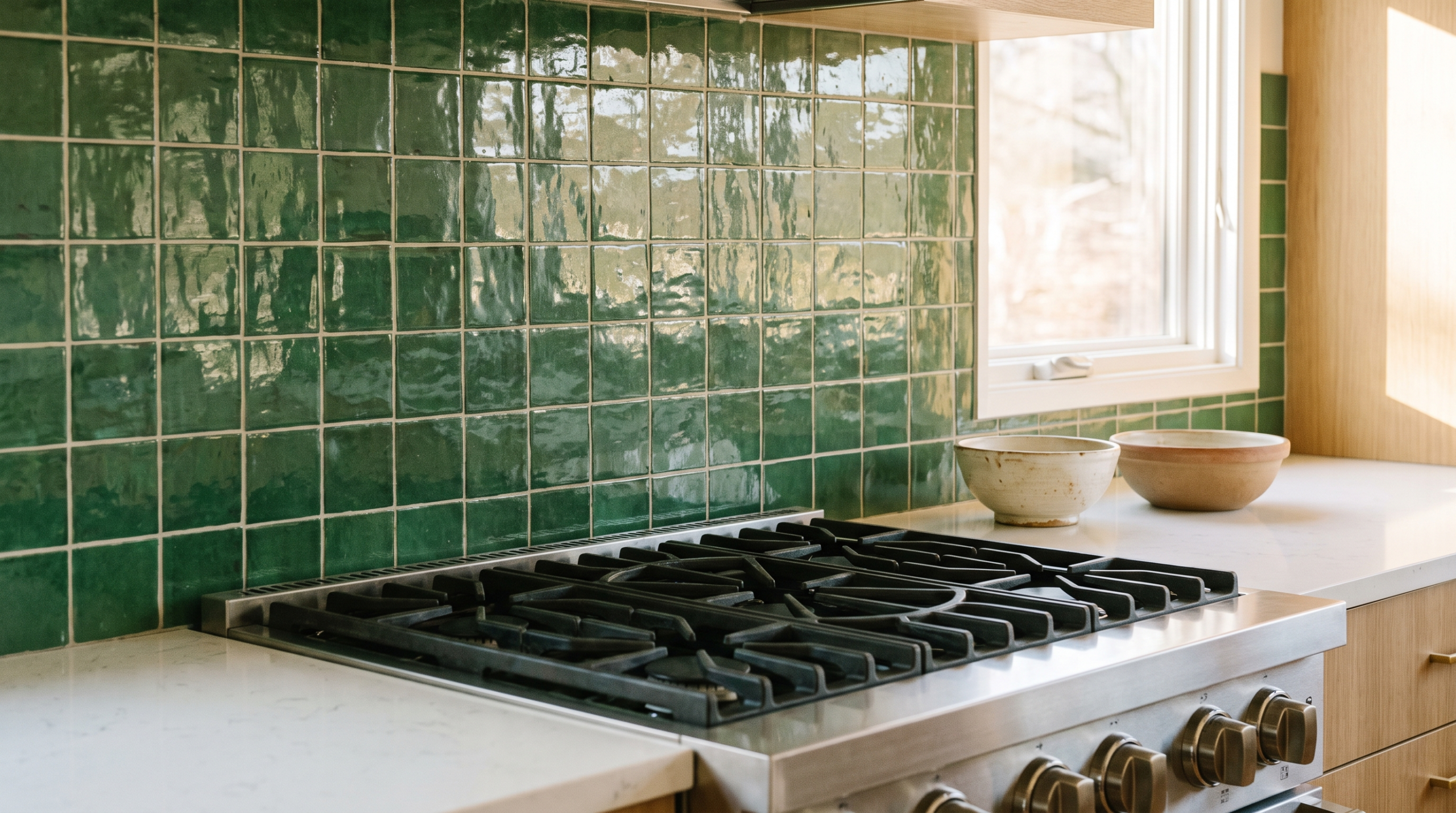
- Ceramic — the workhorse. Glazed ceramic is easy to wipe down, comes in an enormous range of colors and finishes, and handles the heat and humidity above a range without complaint. Handmade and zellige-style ceramics bring subtle color variation and irregular edges that read as warm and artisanal rather than mass-produced.
- Porcelain — denser and less porous than standard ceramic. On a wall you rarely need porcelain’s durability, but you may want it for the way large-format and slab-look porcelain can mimic marble veining without any of the sealing or etching concerns.
- Glass — reflective, completely non-porous, and excellent in kitchens that need more light. Glass mosaic sheets brighten a north-facing Chicago kitchen dramatically. It shows every imperfection in the wall behind it, so substrate prep matters more than with other materials.
- Natural stone — marble, travertine, slate and quartzite bring depth and movement no manufactured tile fully replicates. Stone is porous, so it needs sealing and a bit more care around oil and acidic splatter. Many homeowners accept that trade for the look; others put stone everywhere except directly behind the cooktop.
There is no universally correct answer. A household that cooks with oil daily and wants zero maintenance leans toward glazed ceramic or porcelain. A household that wants the backsplash to be the room’s focal point often accepts stone’s upkeep. Talking through how you actually use the kitchen usually resolves it quickly.
Styles and Layouts That Define the Look
Material sets the mood, but layout sets the style. The same white 3×6 tile reads completely differently depending on how it is set.
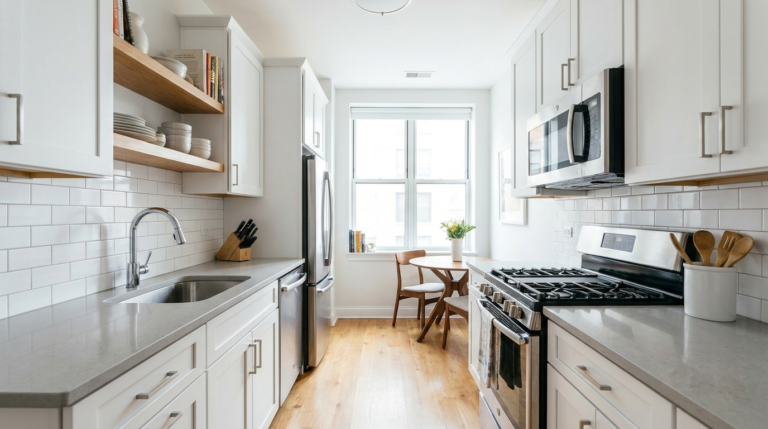
- Running bond (classic subway) — offset by half a tile. Timeless, forgiving, and quiet enough to let cabinetry and countertops lead.
- Stacked — aligned in a clean grid, vertically or horizontally. Reads modern and architectural, but it is unforgiving: every grout line has to be perfect.
- Herringbone and chevron — angled patterns that add movement and make a narrow galley kitchen feel more dynamic. They generate more cuts and more waste, which affects material quantities.
- Vertical stack — a current favorite that draws the eye upward and makes standard eight-foot Chicago ceilings feel taller.
- Mosaic and picket — small-format sheets or elongated hexagons that bring texture. Excellent in small kitchens where a large-format tile would feel out of scale.
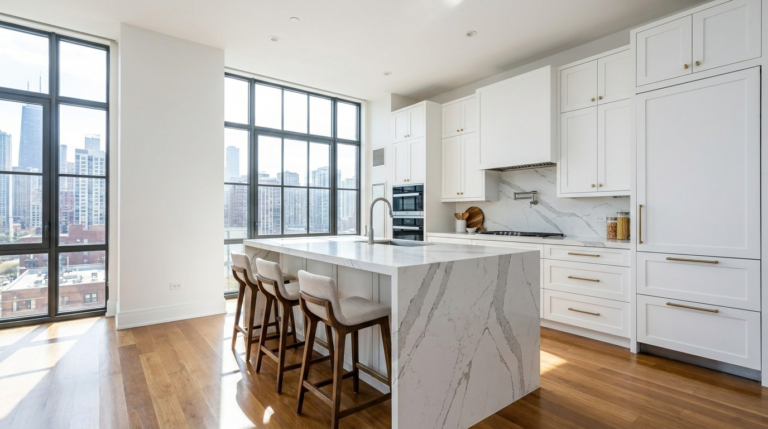
- Slab-style — a single large-format porcelain or stone panel with minimal or no visible seams, often matching the countertop. Sleek, seamless, and the easiest surface in the kitchen to clean.
A useful test: pull one sample of each finalist, tape it to the actual wall, and look at it in morning light and under your evening task lighting. Chicago daylight shifts a lot through the seasons, and a tile that looks warm in a showroom can turn gray in a north-facing kitchen.
How High Should a Backsplash Go?
The standard is countertop to the underside of the upper cabinets, usually around 18 inches. It is the safe, budget-conscious choice and it still protects the wall where splatter actually lands.
Two alternatives are worth considering. Full-height behind the range takes the tile all the way to the hood or ceiling in that one zone, creating a natural focal point where the mess is worst. Full-wall carries tile from counter to ceiling across the whole run — striking in kitchens with open shelving instead of uppers, and increasingly common in contemporary kitchen design and remodeling projects. More coverage means more material and more labor, so it is a design decision with a real budget implication. Discuss it early rather than mid-project.
Grout, Edges and the Details That Age Well
Grout color is not a minor detail. Matching grout to tile makes the surface read as one continuous field; contrasting grout emphasizes the pattern and makes every tile a visible shape. On a herringbone backsplash, that single choice changes the entire result. In a kitchen, many homeowners prefer a mid-tone or epoxy-based grout near the cooktop, since bright white shows oil over time.
Edges matter just as much. Where tile ends at an open wall or a window return, the options are a metal trim profile, a bullnose tile, or a mitered edge — each with a different level of visual polish. Outlets are the other detail that separates good work from adequate work: outlets aligned to grout lines, or covered with matching plates, disappear. Outlets cut through the middle of a decorative tile do not. Good installers plan this before the first tile goes up.
What Backsplash Installation Actually Involves
The visible part — setting tile — is usually the shortest phase. Everything before it determines whether the result lasts.
Wall prep comes first: removing old tile or adhesive, repairing damaged plaster or drywall, and confirming the surface is flat and plumb. In older Chicago homes this is frequently the longest step, because century-old walls are rarely flat and a wavy substrate shows up immediately in a stacked or glass tile. Layout comes next — establishing a level starting line and planning cuts so that awkward slivers land at the edges rather than the center of the wall. Then setting, curing, grouting, and finally caulking the joint where tile meets countertop (that joint moves, so it gets flexible caulk, not grout).
It is realistic work for a skilled DIYer on a simple layout with a forgiving tile. It is much less realistic with glass mosaic, marble, or a mitered edge detail. If you are weighing that decision, our guide on how to choose the right tile installers near you covers what to look for and what to ask.
FAQ
What is the best kitchen backsplash tile for easy cleaning?
Glazed ceramic, porcelain and glass are the easiest to maintain because they are non-porous and need no sealing. Pairing them with a stain-resistant grout in a mid-tone color keeps the area looking clean the longest, especially directly behind a cooktop.
Can I install a backsplash over existing tile?
Sometimes, if the existing tile is well bonded, flat and clean. It is generally not the preferred approach: it adds thickness that can interfere with outlets and cabinet edges, and it hides any problem in the wall behind. Removing the old tile and starting from a sound substrate is the more reliable path.
How long does a backsplash installation take?
It depends heavily on wall condition, tile type and layout complexity. A straightforward run of subway tile on a sound wall is a short job; a full-height natural stone or intricate mosaic installation with significant wall repair takes considerably longer. Any honest timeline comes after someone has seen the actual wall.
Do I need to seal my backsplash?
Natural stone tile and cement-based grout both benefit from sealing, and resealing periodically keeps them looking their best. Glazed ceramic, porcelain and glass do not require sealing, though the grout between them still can.
Should the backsplash match the countertop?
It does not have to. A full slab-match creates a seamless, high-end look, while a contrasting tile adds texture and personality. The reliable rule is that one surface should lead and the other should support — two boldly patterned surfaces competing in the same sightline rarely works.
How much does a kitchen backsplash cost in Chicago?
There is no meaningful single number. Material choice, coverage height, layout complexity, wall condition and edge details all move the figure significantly. Pricing is individual to each kitchen, which is why the right next step is a personalized quote based on your actual space.
Get a Free Quote for Your Chicago Backsplash Project
Whether you are replacing a dated backsplash, finishing a full kitchen renovation, or still deciding between marble and a handmade ceramic, the fastest way to move forward is to talk it through with someone who works with these materials every day. PM Tile serves homeowners across Chicago and the surrounding suburbs with tile and natural stone work, and every estimate is built around your specific kitchen — your wall, your layout, your material. Request a free quote and we will help you get the details right before the first tile goes up.