How Much Does It Cost to Retile a Shower in Chicago?
Cracked grout, a tile that sounds hollow when you tap it, a stain along the base that never quite scrubs out — at some point patching stops working and retiling becomes the honest answer. The first question almost every Chicago homeowner asks is the obvious one: what is the retiling shower cost going to be?
Here is the honest answer up front: there is no single number, and anyone who quotes one before seeing your shower is guessing. What this guide does instead is show you exactly what goes into that figure, so that when estimates land in your inbox you understand what you are comparing — and why two quotes for “the same job” can look very different. Pricing is always individual to the space, so the right final step is a personalized quote. Everything before that step is what you will find below.
What “Retiling a Shower” Actually Includes
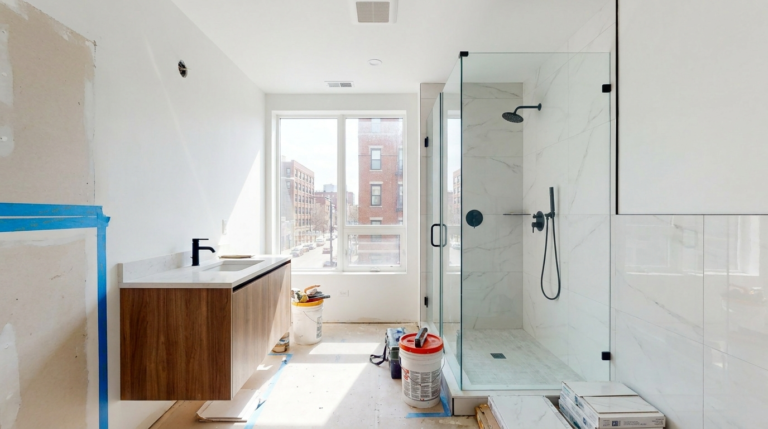
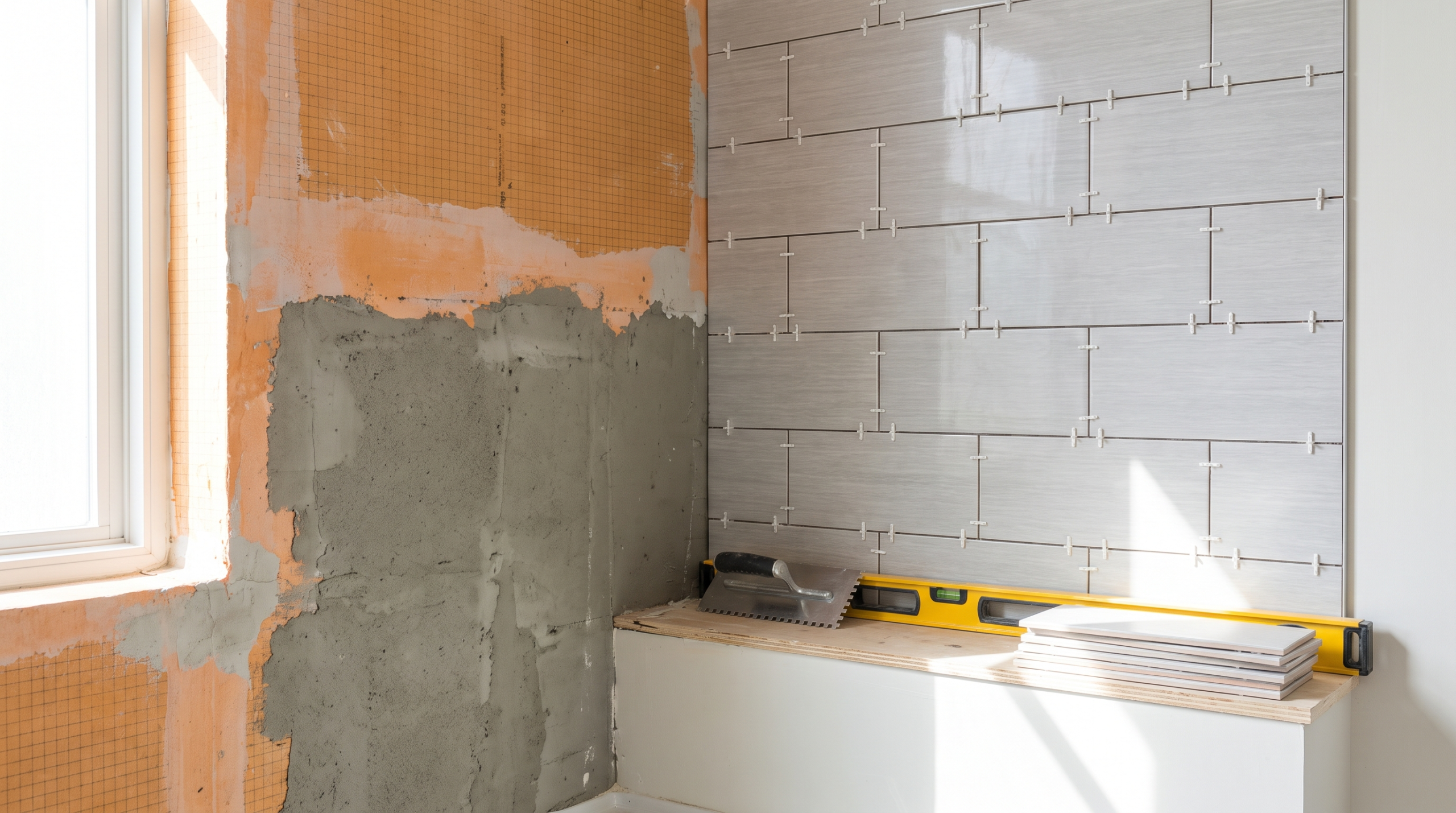
Homeowners often picture retiling as swapping the surface: old tile off, new tile on. In practice, a proper shower retiling and tile installation job is a sequence of stages, and most of them happen before a single new tile is set.
- Demolition — removing old tile, and usually the substrate behind it, down to the studs or a sound base.
- Inspection — checking framing, subfloor and drain area for water damage, rot or mold that was hidden behind the old surface.
- Substrate — installing cement backer board or a foam board system that will not degrade if it ever gets damp.
- Waterproofing — a membrane system over the substrate, plus properly treated corners, seams and the drain connection.
- Setting the tile — layout, cuts, thinset, spacers, and letting everything cure.
- Grout, caulk and finishing — grouting, sealing where the material requires it, flexible caulk at every change of plane, and reinstalling fixtures and glass.
That list matters because it explains the price. A quote that seems unusually low often skips or shortcuts stages three and four — the parts nobody sees, and the parts that decide whether the shower lasts twenty years or leaks in three.
The Biggest Factors Behind Retiling Shower Cost
Every estimate is built from the same handful of variables. Understanding them lets you predict roughly where your project sits before anyone quotes it.
- Surface area. A standard alcove shower with three tiled walls is a very different quantity of material and labor than a large walk-in with a full-height feature wall and a tiled ceiling.
- Tile format and material. This swings the number more than anything else, and it affects labor as well as material — see the next section.
- Layout complexity. Straight stacked or running bond is efficient. Herringbone, chevron, mixed formats and mosaic accents mean far more cuts, more waste and more hours.
- What is behind the old tile. Sound framing keeps the job predictable. Rotted studs, a damaged subfloor or an old mortar bed that must come out adds scope.
- Plumbing and fixture changes. Keeping the valve and drain where they are is the economical path. Moving a drain, converting to a curbless entry, or upgrading to a thermostatic valve brings a plumber into the schedule.
- Built-in features. Niches, benches, curbs and shelves each need framing, waterproofing and their own tile detailing.
- Access and building logistics. A third-floor walk-up, a service elevator with reserved hours, or a narrow city alley for the dumpster all cost time.
Tile Choice: Where the Material Budget Swings Most
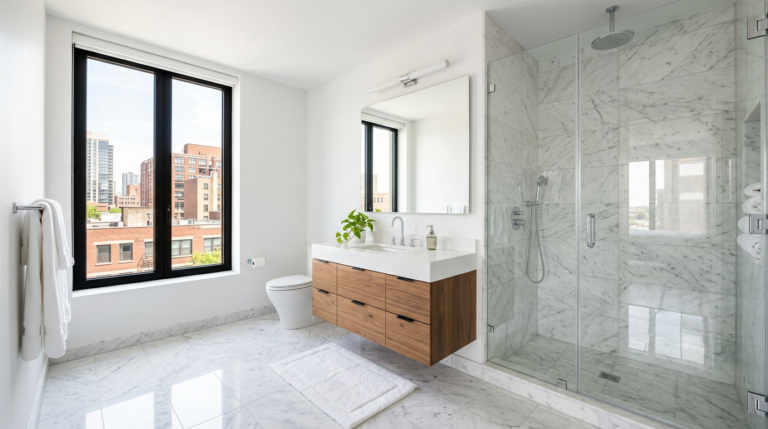
Two showers of identical size can land far apart on price purely because of the tile. Standard glazed ceramic is the value option: widely available, easy to cut, and perfectly durable on a wall. Porcelain costs more but is denser, less porous and available in convincing marble-look patterns without any of the maintenance that real marble asks for.
Natural stone — marble, travertine, limestone, slate — brings depth and movement nothing manufactured quite matches, but it is heavier, more fragile to cut, porous enough to need sealing, and it demands a flatter substrate. All of that shows up as both material and labor. Large-format tile and slab-look panels reduce grout lines and look wonderfully clean, but they require a very flat wall and specialized handling, so prep time goes up even as tile count goes down. At the other end, small mosaics and hexagons are inexpensive per sheet but slow to set well, especially around a drain or a curved wall.
There is no “best” answer here, only trade-offs. If budget is the constraint, a well-installed porcelain in a simple layout will outlast and outperform an ambitious stone installation done in a hurry.
Waterproofing: The Line Item You Cannot See
A shower is the wettest assembly in a house, and the tile itself is not what keeps water out — grout is not waterproof, and neither are most tile bodies. The waterproofing layer behind the tile is what protects the framing, the ceiling below and, in a condo, your downstairs neighbor.
Modern systems — sheet membranes or liquid-applied coatings over a stable backer board, with reinforced corners and a properly integrated drain — are the standard for good reason. They add cost that never becomes visible, which is exactly why they are the first thing cut from a bargain quote. If you take one thing from this article when comparing estimates, make it this: ask each contractor to spell out the waterproofing system by name. A quote that cannot answer that clearly is not really cheaper, just deferred.
Chicago Realities: Older Homes, Condos and Winter
Chicago housing stock adds its own variables. Bungalows, greystones and vintage two-flats often have original showers built over thick mortar beds — heavier and slower to demolish than modern backer board, and frequently concealing decades of slow moisture damage. Plumbing may be galvanized and worth addressing while the wall is open, which is cheaper now than after new tile is set.
Condos and co-ops bring rules rather than surprises: certificates of insurance for the contractor, approved work hours, elevator reservations, and sometimes board approval before demolition. None of it is difficult, but it affects scheduling and therefore labor. And because Chicago winters push everyone indoors, remodeling demand is not flat across the year — booking further ahead generally gives you more flexibility on both timing and crew availability.
Retile the Shower, or Remodel the Whole Bathroom?
If the shower is the only tired element and the layout still works, retiling alone is the efficient choice. But it is worth pausing before you commit, because the demolition already opens walls and puts a crew in the room. If you also dislike the vanity, the floor tile or the lighting, doing it all at once usually costs less than two separate projects — and avoids a second stretch without a usable bathroom.
A practical test: if more than two elements in the room bother you, get pricing for both a shower-only retile and a full bathroom remodeling in Chicago scope, then compare. The gap is often smaller than homeowners expect.
FAQ
How long does it take to retile a shower?
Typically several days rather than a single day, because materials need curing time between stages — substrate, waterproofing, thinset and grout each have their own schedule. Rushing those steps is the most common cause of early failure. Older homes with hidden damage or custom stone work take longer still.
Can I retile over existing shower tile?
It is technically possible in limited cases, but it is rarely a good idea in a wet area. Tiling over old tile hides whatever condition the substrate and waterproofing are in, adds thickness that complicates the valve trim and drain, and increases weight on the wall. Starting from a sound, properly waterproofed base is the reliable approach.
Is retiling a shower a realistic DIY project?
Setting tile on a flat, dry wall is learnable. A shower is a different matter, because waterproofing, slope to the drain and corner detailing leave no room for error and failures show up as water damage rather than a cosmetic flaw. If you are weighing it, our guide on whether a beginner can install tile is a useful reality check.
What is the cheapest way to update a shower?
If the tile and waterproofing are genuinely sound, regrouting, recaulking and replacing fixtures or the glass enclosure can refresh the look for far less than a retile. That only works when the underlying assembly is healthy — hollow-sounding tiles, persistent damp smells or staining on the ceiling below mean the problem is structural, not cosmetic.
Does retiling a shower add value to a Chicago home?
Bathrooms consistently rank among the details buyers notice most, and a dated or visibly leaking shower is a common objection during showings. A clean, properly built shower removes that objection. As with any improvement, the return depends on the property, the neighborhood and the quality of the work.
Why do quotes for the same shower vary so much?
Usually because they are not actually the same scope. Differences in waterproofing system, substrate, how much demolition is included, tile format, and whether plumbing work is accounted for can all hide inside similar-looking line items. Ask each contractor to itemize what is behind the tile, not just the tile.
Get a Free Quote for Your Chicago Shower Retiling Project
The only way to turn all of this into a real number is to have someone look at your actual shower — its size, its condition, what is behind the walls and what you want it to become. PM Tile works with homeowners across Chicago and the surrounding suburbs on tile, natural stone and bathroom projects, and every estimate is built around the specific space rather than a generic price list. Request a free quote and get a clear, personalized picture of what your shower retile involves.