Can a Beginner Install Tile?
If you’re a Chicago homeowner looking to refresh a bathroom or kitchen with new tile, you might be wondering: can a first-timer really handle a tile installation? The good news is yes – a patient beginner can successfully install tile on a floor or wall. Many DIY enthusiasts in Chicago have tiled backsplashes and floors with great results. However, it’s important to approach the project with proper preparation, the right tools, and realistic expectations. This friendly guide offers practical renovation advice on what to consider before starting, what you’ll need, the basic steps, common mistakes to avoid, and when it’s better to call in a professional.
What to Consider Before Starting
Before you pry up that old floor or start spreading mortar, take a step back and consider the scope and demands of a DIY tile project. Here are some key points to think about:
- Project scope and complexity: Start with a manageable project. We genuinely believe tiling can be for anyone willing to learn, but it’s wise to begin with something small – for example, a backsplash or a small entryway floor. If your plan is a complicated tile layout or a shower that requires waterproofing and drains, understand that these are much more challenging. A simple kitchen backsplash or a straightforward floor in a square room is a better beginner project than, say, a custom shower pan with multiple niches. Choose a project that matches your skill level so you don’t get overwhelmed.
- Time and disruption: Tiling isn’t an hour-long fix – it’s often a multi-day process when you include prep, laying tile, waiting for mortar to cure, and grouting. Consider how long the area will be out of use. Is it your only bathroom or your main entryway? Plan for that room to be off-limits for at least a couple of days. Do you have the time to dedicate to this project? If you have a full-time job or kids, finding free hours to tile (and energy at the end of the day) can be tough. Make sure you can afford to have the space under renovation and that you can work without rushing – rushing leads to mistakes.
- Budget and tools: DIY will save you labor costs, but it’s not free. You’ll need to purchase or rent materials and tools. Ask yourself if you’re comfortable investing in tools like a tile cutter or wet saw, notched trowels, and more. Some tools can be rented to save money (for example, many people rent a wet saw for one-time tile jobs rather than buying). Also, budget for about 10% extra tile and supplies in case of breakage or mistakes – running out of tile in the middle of a project is a common rookie mistake. Overall, DIY tiling can be cheaper than hiring a pro, but only if you do it right the first time and don’t have to re-buy materials.
- Physical and skill demands: Tile installation is a hands-and-knees job that requires patience and precision. Be prepared for some physical work: you’ll be kneeling a lot (knee pads are your friend), lifting boxes of tile, and making repetitive motions. It’s also a bit messy and dusty (cutting tile creates dust, and mixing mortar or grout can splatter). If you enjoy detailed DIY tasks and are comfortable reading instructions carefully, you’ll likely find tiling rewarding. If you’re easily frustrated by fussy measurements or imperfect results, it might test your patience. Keep in mind that even though it’s DIY, accuracy matters – small errors in layout or spreading mortar can cause big headaches later.
- Surface condition (especially in older Chicago homes): Consider the condition of the surface you plan to tile. In many older Chicago houses, walls might not be perfectly plumb and floors might not be perfectly level. Tiling over an uneven surface can lead to crooked lines and even cracked tiles down the road. You may need to do some prep work like replacing or stabilizing a subfloor, or using a self-leveling compound on a floor that slopes or dips. Ensure the subfloor or wall is clean, dry, and solid. If you have old tile or laminate to remove, factor in that demolition and cleanup time too. Skipping the prep work is one of the biggest reasons DIY tile jobs fail, so plan to address any dips, bumps, or loose material before you start laying tiles.
- Location and climate considerations: Think about where the tile will be installed. Indoor projects (kitchen, bathroom, foyer) are ideal for beginners. If you are considering an outdoor tiling project (like a patio or outdoor steps), know that Chicago’s freeze-thaw winters add complexity. Tiles and grout can expand and contract with temperature change, so exterior work requires special materials and techniques (for example, using frost-resistant tiles and leaving expansion gaps). Beginners are usually better off starting indoors, where temperature and weather are not factors. Likewise, if the area is a wet zone (such as a shower or tub surround), waterproofing is critical – a mistimed or improper installation could lead to leaks. When in doubt, start with a dry area or a spot with less at stake (e.g. a backsplash instead of a shower) to build your confidence.
By carefully evaluating these factors, you’ll have a much clearer idea of whether DIY tiling is right for you and how to set yourself up for success.
Tools and Materials Needed
Tiling requires a collection of tools and materials – some you may already have, and some you might need to acquire. Here’s a checklist of essential items you’ll need to gather before you begin:
- Tiles (plus extras): Have enough tile to cover your area plus about 10% extra for cuts and breakage. This ensures you won’t panic if you crack a tile while cutting or miscalculate a row. Also, get matching tile trim pieces if your design needs edge trim or bullnose tiles for a finished look.
- Underlayment: Depending on the surface, you may need an underlayment material. For wood subfloors or drywall in wet areas, you’ll typically use cement backer board (cementboard) to create a stable, moisture-resistant base for tile. Backer boards (like HardieBacker or Durock) come in sheets and are screwed down to floors or walls. If you’re tiling a concrete floor (common in basements or condos), you usually can tile directly on the concrete if it’s in good shape (clean, level, no cracks). Make sure to get the appropriate screws or mortar for installing your backer board if you need it.
- Thin-set mortar (tile adhesive): Thin-set mortar is the “glue” that holds tile to the floor or wall. It usually comes as a powder that you mix with water (or latex additive) to a peanut-butter-like consistency. Choose a mortar that suits your tile type – for example, porcelain tiles should use a polymer-modified thin-set for a strong bond. There are also premixed tile adhesives (mastic) sold in buckets, which can be convenient for walls or small areas, but they aren’t suitable for all applications (not for floor tiles or wet areas like showers in most cases). When in doubt, ask the tile supplier for the right mortar type for your tile and substrate.
- Notched trowel: This is used to spread the mortar. Trowels come with different notch sizes (e.g. 1/4″, 3/8″, 1/2″) – the notch size determines how much mortar is left on the floor/wall to grip the tile. Generally, larger tiles need a larger notch. Your tile’s manufacturer or the mortar bag will often recommend a trowel notch size. Commonly, a 1/4″ x 1/4″ square-notch trowel is used for tiles up to about 8 or 10 inches, while bigger tiles (12″+) might need a 1/2″ notch to ensure enough mortar bed. (Tip: If you’re unsure, 1/4″ notch is a good starting point for many standard tile jobs.)
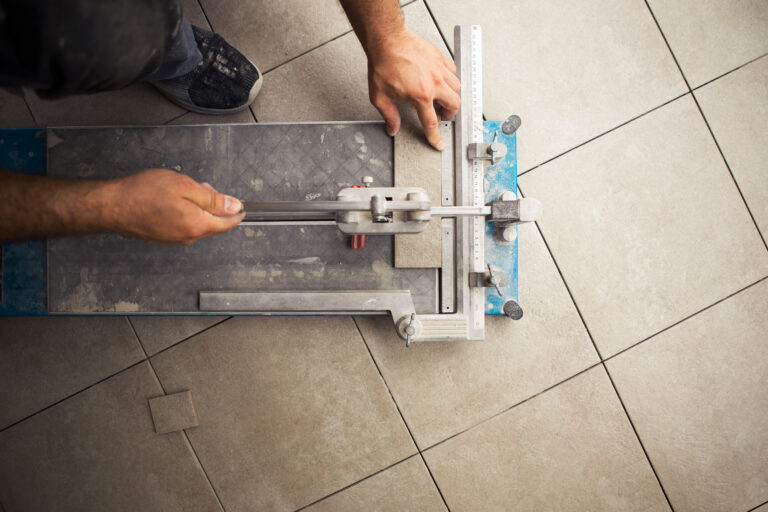
- Tile cutting tools: Very few spaces work out so that you never have to cut a tile. At minimum, you’ll need some way to cut tiles for edges, corners, or around obstacles. There are a few options: a manual snap cutter (good for straight cuts on ceramic tiles), a tile nipper (hand tool for nipping off small pieces or curves), and an electric wet tile saw for more precise or hard material cuts. For a beginner doing a small project, a snap cutter and nipper might suffice. You can often rent a wet saw from a hardware store if you have lots of cuts or are using tough porcelain or stone tiles that snap cutters can’t handle. (Remember to wear eye protection when cutting tiles, especially with power tools, as shards can fly.)
- Tile spacers (and optional leveling system): Tile spacers are little plastic crosses or T-shapes that you insert between tiles to ensure consistent grout lines. They come in various sizes (like 1/8″, 3/16″, 1/4″ – referring to the width of the gap). Decide the spacing based on your tile and look (larger tiles often use 1/8″ for a tight look, standard floors often 3/16″ or 1/4″). Use spacers generously – at least at each corner of a tile – to keep your layout true. For wall tiles, you might get wedge-shaped spacers that help support tiles so they don’t slide down. Optional: A tile leveling system can be very handy, especially for large floor tiles. These systems use special spacers or clips with wedges that hold tiles at the same height while the mortar sets, preventing “lippage” (one tile edge higher than the adjacent tile). While not strictly necessary, many DIYers find them useful to achieve a flatter floor. (If using one, read the instructions – typically you insert the clips while tiling and then after the mortar dries you snap off the temporary bits.)
- Level and straightedge: A 2- or 4-foot level is essential for checking that your tiles are sitting flat and that rows are not drifting off-level on a wall. A straight board or a straightedge tool is also useful to check flatness across multiple tiles (no high corners). In an old home, don’t assume walls or floors are already level! Always double-check as you work.
- Tape measure, pencil/chalk, and layout tools: Measuring the space and marking guidelines is crucial. Have a tape measure and a pencil (or chalk line) to mark reference lines on the surface. Common practice is to mark a center line or grid to align your tiles. For floors, snapping chalk lines to find the center of the room and establish square lines is very helpful. For walls, you might use a level to draw vertical and horizontal guide lines starting from a focal point (like the center of a backsplash or one tile up from a tub). Also grab a straight piece of wood (sometimes called a batten for wall tiling) or a laser level to help keep things straight, especially if you’re doing a wall and need a support to start the first row.
- Rubber mallet: A white or rubber mallet is useful to gently tap tiles into place and level them out. Don’t whack too hard (tiles can crack), but a light tap helps ensure full contact with the mortar and that one tile isn’t sitting higher than its neighbors.
- Buckets and mixing tools: You’ll need at least two buckets: one for mixing thin-set mortar and one for mixing grout (or for clean water to rinse your sponge). It’s important to have a strong mixing paddle (a drill attachment) or something to mix your mortar and grout thoroughly – consistency matters. (Consider renting a mixing drill if you don’t have a strong drill for this.) Also have a margin trowel or spatula for scraping the sides of the bucket and hand-mixing small batches.
- Grout and grout float: After tiles are set and the mortar is cured, you’ll fill the gaps with grout. Grout comes in different types (sanded vs. unsanded, premixed vs. powder). Choose the type based on your grout line width and tile type (e.g. sanded grout for floor joints 1/8″ or larger, unsanded for very thin joints or delicate tiles). Also pick a color that complements your tile. To apply grout, you need a rubber grout float, which is like a firm rubber trowel. It’s used to spread grout and pack it into the joints. Have one ready along with a big sponge and plenty of clean rags for cleanup.
- Sponge and cleanup cloths: A large, damp sponge is essential for wiping off excess grout from the tile surface after you apply grout. You’ll also use sponges for cleaning your tools and wiping surfaces during both the mortar and grouting stages. Keep a stack of old rags or microfiber cloths for final polishing of tiles to remove any grout haze.
- Sealant (if needed): Depending on your materials, you might need sealers. For example, natural stone tiles often need to be sealed to prevent stains. Some people also seal grout after it cures, to help prevent mildew or staining (this is optional but a good idea for light-colored grout or in a shower). Check if your tile or grout calls for a sealer and have that on hand for after installation. A sponge or small applicator brush will be used to apply it.
- Safety gear: Don’t forget safety basics. Wear protective eyewear when cutting or chipping tiles. Use gloves when handling mortar and grout – the cement in these can be caustic on skin (plus it’s just messy). A dust mask is smart if you’ll be stirring up old material or cutting a lot of tile (tile dust or old thinset can contain silica, which is harmful to breathe). Also, as mentioned, knee pads will greatly increase your comfort when working on a floor! Tile work can be tough on the knees and back, so take care of yourself with proper gear and posture as you work.
It may seem like a long list, but most of these tools are readily available at home improvement stores. A well-prepared workspace with all the needed tools will make the installation go much smoother.
Step-by-Step Overview of the Process
Now that you’ve considered the project and assembled your materials, let’s walk through an overview of the tiling process. While detailed instructions will vary based on your exact project, the basic steps for installing tile (floor or wall) are as follows:
- Plan and measure the layout: Good planning makes all the difference. Start by measuring your space and deciding on the tile layout. Often, you’ll want to find the center point of the area and work outward, so that cut tiles at the edges are balanced on both sides. For floors, snapping two perpendicular chalk lines through the center of the room can serve as guides to keep your tile rows straight and centered. Dry-lay a row of tiles (with spacers) in each direction from the center to see how the tiles will fall at the edges. If you end up with a tiny sliver of a tile at the edge, adjust your starting point or layout – it’s better to have larger cut pieces at the borders than a skinny 1-inch piece. For walls, similarly plan your starting line: e.g. centered under a range hood for a backsplash, or one row up from the tub so you don’t have a tiny cut piece at the bottom. Mark reference lines on your surface (horizontal and vertical) to guide the placement. This planning step also includes checking that the surface is ready – ensure the subfloor or wall is flat and solid. If you discover a dip or hump, address it now (with leveling compound or sanding down) because tiles need a flat plane.
- Prepare the surface: Proper prep is critical. If you’re tiling a floor, install your cement backer board if needed (screw it down according to instructions, usually with thin-set beneath it and backer board screws; tape the seams with fiberglass mesh tape). Make sure any underlayment is secured and the surface is clean, dry, and dust-free. Remove things like baseboards or trim (you’ll reinstall or replace them after tiling to cover the expansion gap at edges). In a bathroom, also remove fixtures like the toilet (tiling around a toilet is possible, but it’s much easier and a better result if you pull it out first). For a wall, if it’s a painted wall, scuff it with sandpaper to help thin-set adhere, and vacuum off dust. Essentially, you want a sound surface with no grease, wax, or debris. Tip: Before tiling, lay out your tiles in the room (or on a large area of floor) exactly as you plan to install them, including spacers. This dry run helps double-check your pattern and cuts.
- Mix your mortar: Once your surface is prepped and your layout is marked, it’s time to mix the thin-set mortar. Follow the package directions – typically, you pour the powder into a bucket of water and mix until you get a smooth, peanut-butter consistency with no dry lumps. Let it “slake” (rest) for 5-10 minutes, then give it a final stir. Important: Only mix as much mortar as you can use within about 20-30 minutes (or whatever the working time is on the product). If you mix a huge batch and work too slowly, it will start to harden in the bucket. It’s better to mix multiple small batches than to waste a big one that dried on you. Have your tools and tiles ready to go before you spread mortar, because once you start, you don’t want delays.
- Spread mortar and set the first tiles: Using your notched trowel, spread mortar on the surface for a section of tile – usually you’d start at the intersection of your reference lines (center of floor, or a bottom-center for a wall) and work outwards. Hold the trowel at a 45-degree angle to create ridges of even heigh. Only cover a small area at a time (maybe a few square feet) so the mortar stays fresh. Set your first tile by pressing it firmly into the mortar bed, wiggling it a little to ensure a good bond. Then place the next tile adjacent, using spacers between them to maintain the gap. As you lay each tile, check that it’s sitting level with its neighbors and not higher or lower (if one is too high, you might need to remove it and scrape a bit more mortar underneath, or tap it down with your rubber mallet). If mortar oozes up into the grout joint, scoop it out so the joint is mostly clear (a little is fine, but you’ll need space for grout later). Continue setting tiles in your planned order – for a floor, you might do a quadrant of the room at a time; for a wall, you might tile one section or one row at a time, using spacers or ledger boards to support as needed. Remember to use those spacers consistently. Every so often, use a long level or straightedge across the tops of the tiles to ensure you’re not developing a bump or dip. Adjust as necessary while the mortar is still wet.
- Cut and fit edge pieces: When you reach the walls or corners where a full tile doesn’t fit, you’ll need to measure and cut tiles to size. Measure the gap carefully (accounting for the spacer) and mark the tile. Use your tile cutter or wet saw to make the cut. For awkward shapes (around a pipe, for example), you might make a cardboard template, then trace it on the tile and use a combination of straight cuts and nibbles with the tile nipper to get the shape. Place the cut tiles into the spaces with spacers around them. Ideally, you planned your layout so that cut tiles are at least half the size of a full tile for a nicer look. As you work, keep checking that no tiles have shifted and that your pattern is maintaining alignment. Wipe off any big globs of mortar that get on the tile surface – it’s easier to clean now than after it hardens.
- Allow tiles to set: Once all your tiles are laid in the section (or the whole room), resist the urge to immediately move to grouting. The mortar needs time to cure without disturbance. Check your thin-set instructions, but generally you should wait about 24 hours before heavy foot traffic or before doing the grout step. In fact, Home Depot’s guide suggests staying off a newly tiled floor for at least 24 hours to let it harden properly. If it’s a wall, obviously you’re not walking on it, but still give it time before poking at the tiles or hanging things on them. Use this waiting time to clean up your tools (mortar is much harder to remove once dried – clean your trowel, bucket, etc., right away). Also, remove any spacers gently (some people pull spacers before the mortar is fully hard, like after a few hours when it’s stiff but not rock solid, which can be easier – just don’t bump the tiles). Plan the timing such that you aren’t forced to step on the tile. For instance, tile yourself out of a room toward a doorway. In Chicago homes, that might mean start tiling along the far wall and finish at the door so you can exit without walking on your handiwork overnight!
- Grout the tile joints: After the wait, it’s time to apply grout between the tiles. Make sure all spacers are removed. Mix up your grout per the instructions (if it’s a cement-based grout, it might need a slake time as well). Working in small sections, use the rubber grout float to spread grout across the tiles, pressing it into the joints from different angles to ensure full coverage. Hold the float at about 45° and scrape off excess as you go. Once the joints are filled, take a damp (not sopping wet) sponge and wipe across the tiles diagonally to remove excess grout from the tile surface. Rinse the sponge often and avoid digging into the grout lines. It often takes a few passes to get the tiles clean. Be gentle – you don’t want to pull grout out of the joints you just filled. A common beginner mistake is not cleaning grout off in time; if grout is left clumped on the tile face, it will dry and be very hard to remove. So, keep an eye on that “grout haze” and wipe the tiles before that happens. Continue until all joints are grouted. This step is messy; have a bucket of clean water and change it frequently. Once you’ve finished an area, let it be for about 30-60 minutes, then do a final wipe to catch any film. You can buff off remaining slight haze with a soft cloth once the grout has set a bit.
- Final cleanup and sealing: After the grout is applied, there is typically a curing period (e.g. grout might set firm in 24 hours, but full cure can be a couple of days). During this time, avoid harsh cleaning or getting the grout super wet. Once the grout is fully cured (often 48-72 hours), you can apply a grout sealer if you choose. Sealing the grout will help prevent stains and moisture absorption, which is especially good in a shower or on a floor with light grout. Apply sealer with a small brush or applicator per product directions. Also, now is the time to caulk around edges where tile meets a tub, or in corners of showers, or along the floor edges if needed. Caulk any expansion gaps (like the 1/4″ gap you should have left at the room perimeter) to prevent water intrusion. Then reinstall trim moldings or baseboards to cover those edges. Clean up any remaining haze on the tiles – sometimes using a dedicated grout haze remover or just a 50/50 mix of vinegar and water can help for any stubborn residue (if the tile is not acid-sensitive). And that’s it – your new tile is installed! Step back and admire the transformation. It’s pretty satisfying, isn’t it?
This was an overview; each step has its own details to learn, but even as a beginner you can follow these general steps to complete a tile project. Take your time at each stage – as the saying goes, “tiling is 90% preparation and 10% installation.”
Common Beginner Mistakes and How to Avoid Them
Even with good preparation, it’s easy to stumble on some common pitfalls when you’re new to tiling. Here are a few frequent beginner mistakes and tips on how to avoid them:
- Poor surface preparation: Skipping or skimping on prep work is a top mistake. Tile needs a stable, flat base. If you tile over dirt, loose old paint, an unlevel floor, or a flexing subfloor, you’re likely to have problems like cracked or popping tiles later. For example, assuming the floor is flat and walls are square without checking can lead to big issues. Always clean the surface thoroughly and fix any uneven spots before you start. This might mean spending a day on prep – removing old flooring or adhesive, patching holes, sanding high spots, or laying backer board – but it is time well spent. A well-prepared surface sets you up for a successful installation, whereas a bad surface guarantees problems.
- Lack of layout planning: Diving right in without planning the tile layout is a recipe for awkward results. Beginners might start in a corner and tile straight out, only to discover at the end that they have a tiny sliver of tile needed, or that the pattern looks lopsided. To avoid this, take time to plan and dry-lay tiles in advance. Find the center and see how full tiles will land at the edges. If your tile has a pattern or grain (like faux wood planks), decide orientation ahead of time. Check that your design is balanced and that any cut pieces at the borders are a reasonable size (at least half a tile if possible). By doing a “dry run” with spacers, you can adjust before any mortar is down. It’s much easier to tweak the layout beforehand than after tiles are stuck. Also, plan your transitions (like where a floor meets another flooring type or a carpet) so your tile will end at a logical point, possibly under a door or with a threshold trim.
- Using the wrong trowel or adhesive technique: Not all tiles are set the same way. One common mistake is not using enough mortar or the right trowel technique. For instance, if a beginner just plops four dabs of mortar on the back of a tile (sometimes called “spot bonding”) instead of spreading it evenly, the tile won’t have full support and may crack or pop loose later. The fix: use the correct notched trowel to comb mortar across the entire area under each tile, so you get good coverage (experts shoot for ~90-100% coverage on floors). Similarly, large tiles often benefit from “back-buttering” – applying a thin layer of mortar on the back of the tile as well as on the floor – to ensure no hollow spots. Choose your mortar type wisely too. Don’t use a basic wall mastic on a floor or it may not hold. And if you’re tiling in a high-moisture area (like a shower or basement floor), make sure to use appropriate waterproof or polymer-modified adhesives that can handle those conditions. When in doubt, ask at the tile store or read the tile manufacturer’s recommendations for installation.
- Messy or improper grouting: Grout can be tricky for first-timers. A couple of common errors: mixing grout with too much water (weakening it), not packing the joints fully (leading to air pockets or cracks), or not cleaning the excess grout off the tiles in time. Always remove excess grout right away – if it hardens on the tile surface, it’s much harder to get off and can leave a haze. To avoid grief, work in small sections when grouting and wipe the tiles with a damp sponge frequently. Also, make sure your grout is pushed fully into each joint; gaps or shallow grout lines will crumble or collect dirt. Another mistake is grouting too soon, before the tiles are firmly set – that can shift tiles or cause cracks. Patience is key: wait the recommended time (usually a day) after tiling to start grouting. One more tip: use the right grout type – sanded grout for wider gaps, unsanded for narrow gaps – and don’t grout corners or changes of plane. Use caulk in corners (like where wall meets floor or two walls meet) because grout will crack there due to slight movements.
- Being impatient (time and foot traffic): Tiling is not a job to rush. Beginners sometimes make the mistake of not giving materials enough time – like not letting the mortar cure fully. If you walk on a tile floor too soon, you can break the bond or misalign tiles that seemed set. As mentioned, plan to stay off a new tile floor for about 24 hours. Similarly, don’t dump heavy furniture onto a freshly tiled floor the next day; give the grout at least a couple of days to harden. Another time-related mistake is not having enough time and then scrambling. If you mix a giant batch of mortar and then realize you’re running behind, you might be tempted to keep using mortar that’s past its pot life (leading to weak bonding) or just haphazardly slap tiles down. It’s better to do things in stages and only as much as you can carefully handle. Also, ensure you have extra materials – not having enough tile or grout and then finding out the store is out of stock can be a nightmare. Always buy a bit more than you need upfront (again, ~10% extra tile is industry standard) so you don’t have to stop work and hunt for the same tile later. Lastly, don’t ignore cleanup. Wipe tools, excess mortar, and grout as you go. Dried cement-based products are stubborn to remove (from both tiles and tools), so save yourself the pain by cleaning early and often.
By keeping these common mistakes in mind, you can take steps to avoid them. When in doubt, pause and double-check your work – a level, a measuring tape, or simply stepping back to look at the overall pattern can catch a problem before it gets worse. Remember, even professionals had to learn these lessons over time, so don’t be too hard on yourself if you correct a mistake or two along the way.
When It’s Better to Hire a Professional
DIY tiling can be rewarding, but there are certainly situations where calling a professional tile installer is the smarter move. How do you know when to throw in the towel (or trowel) and bring in an expert? Consider hiring a pro in scenarios like these:
- Complex or high-stakes projects: If your project involves a complicated layout, expensive materials, or critical waterproofing, a professional’s expertise is invaluable. For example, a custom tiled shower with niches, benches, and a sloped mortar pan for drainage is not a simple beginner job – there’s a lot that can go wrong (leaks, improper slopes, etc.). Professionals know how to properly waterproof showers and handle tricky layouts. Likewise, if you’re doing something like an intricate mosaic design or installing large-format tiles over in-floor heating, those are projects where experience counts. As one remodeling expert put it, attempting a tile job with little experience in a kitchen or bath (the areas that provide a lot of home value) can be risky – mistakes can affect the entire room’s function and look. In short, if the tile work is critical to protecting your home (waterproofing) or is very complex, it’s often better left to the pros.
- Large areas or tight timelines: Tiling a whole house worth of flooring or a big space (like a large open kitchen and dining area) is a huge time commitment for a DIYer. Professionals come with a crew and can often knock out a big job much faster than you doing it on nights and weekends. If you have a deadline – say, you want your basement rec room tiled before a big family event – hiring a pro will likely get it done in a predictable timeframe. Pros also have all the right tools and skills at the ready, which speeds things up. What might take you a week of painstaking work could be done in a day or two by an experienced installer. So if time is money or you need the job done by a certain date, you might save sanity by paying for professional installation.
- When you have limited time or DIY comfort: Even aside from deadlines, think about your personal bandwidth. Perhaps you could do the job, but realistically, will you have the free time and focus to dedicate to it? If you suspect a tiling project will stretch out over months of weekends (and drive your family crazy with a half-finished bathroom), professional installation starts to look appealing. Also, consider how confident and comfortable you feel. If the idea of operating a wet saw or mixing mud makes you nervous, there’s nothing wrong with deciding it’s not your cup of tea. As Atlas Tile noted, it ultimately comes down to what makes sense for your home and budget, and there’s no single “right” choice. If you have the ambition but not the free time (or vice versa), hiring out may be the best path.
- Structural or unforeseen issues: Tiling in older Chicago homes can sometimes unveil surprises – like a subfloor that is rotted or uneven joists that need carpentry work, or old plumbing that isn’t up to code. Professionals not only install tile, but many are knowledgeable about the associated trades (or work in teams with plumbers/carpenters) to handle these issues. If your project goes beyond just replacing the surface finish – for instance, you remove old flooring and discover structural repairs are needed, or you want to move a floor drain, or add radiant heating under the tile – then a contractor is definitely recommended. They will ensure the foundation of your tile (be it subfloor prep, waterproof underlayment, etc.) is done correctly and safely. Additionally, licensed pros understand local building codes and permitting. In Chicago, certain remodels (especially in multi-family buildings or where plumbing is altered) might require permits and inspections. Pros can navigate this process so you don’t accidentally run afoul of regulations. In short, if a “simple tile job” is actually part of a larger renovation or if it reveals bigger problems, get professional help.
- Desire for a perfect finish: Let’s face it, even the most careful first-timer might not achieve the same level of perfection as an experienced tile setter. Pros have years of experience and know-how, which helps them avoid mistakes and deliver a clean, even resul. If you’re dealing with very high-end tile (imagine $100-per-square-foot imported marble) or you have a pattern that must be absolutely precise, you might want the peace of mind of a professional installation. Professionals also typically offer some warranty or guarantee on their work. If anything goes wrong or if tiles crack due to installation issues, they will often come back to fix it. When you DIY, you own any mistakes. So if you absolutely need the job done to the highest standard, or you know you’d lose sleep over small imperfections, hiring a pro is worth the cost.
One more advantage of hiring professionals, especially local Chicago tile contractors: they understand the local conditions. They know, for instance, which materials hold up best in Chicago’s freeze-thaw climate and humid summers, and can make sure exterior installations have proper expansion joints and use the right grout or sealers. They will also bring all the specialty tools needed (a big wet saw for those precise cuts, a power mixer, etc.), so you don’t have to procure those yourself. In the end, while hiring a professional tiler does cost more upfront, it can save you time, stress, and potentially the cost of fixing DIY errors.
Conclusion
In summary, a beginner can install tile with the right preparation, tools, and patience. Many Chicago homeowners have successfully tackled DIY tile projects and gained the satisfaction of improving their homes with their own hands. If you start with a realistic game plan – maybe a small backsplash or a bathroom floor – you can build your skills and confidence. Tiling is a bit of an art and a science, but it’s very learnable for handy folks. That said, part of being a smart DIYer is knowing your limits. This guide has highlighted both the do-it-yourself path and the points at which calling a professional makes sense. Whether you decide to DIY or hire out, you’ll soon be enjoying a beautiful tiled space. Good luck with your project, stay safe, and remember: measure twice, cut once, and don’t let the Chicago cold keep your tile from setting properly! Happy tiling!