How Long Does a Bathroom Remodel Take? A Realistic Timeline
Before the tile samples and the vanity photos, most homeowners want a calendar. How long does a bathroom remodel take — and, more to the point, how long will the household be down one bathroom? The honest answer is that a straightforward Chicago bathroom usually takes about two to three weeks of active work on site, while a full gut with a new layout can stretch to four to six weeks or longer. But the on-site stretch is only part of the story. Planning, ordering and, in a lot of Chicago buildings, approvals all happen before a single tile comes off the wall. Below is a realistic phase-by-phase timeline, the things that most often push a schedule out, and the places where you actually have control. If you are getting ready to start, our team handles bathroom remodeling in Chicago from tile and stone through to the finished space.
The Short Answer: Typical Bathroom Remodel Timelines
Every bathroom is different, but projects tend to cluster into a few recognizable sizes. These ranges describe active work on site, once materials are on hand and any approvals are in place.
- Cosmetic refresh — new vanity, mirror, light fixture, paint, maybe a floor: roughly 3 to 7 days.
- Standard full remodel, same layout — everything replaced, plumbing stays where it is: roughly 2 to 3 weeks.
- Full gut with layout changes — fixtures move, plumbing and electrical are rerouted, a tub becomes a walk-in shower: roughly 4 to 6 weeks.
- Large primary bath, structural work or a complex building — double vanity, custom glass, niches, heated floors, permits: 6 weeks and up.
Add to all of these a planning and procurement window before demolition. Two to eight weeks is common, driven mostly by how quickly selections get finalized and how long the longest-lead item takes to arrive.
A Phase-by-Phase Bathroom Remodel Timeline
It helps to see where the days actually go. Most bathroom projects move through the same sequence, and each stage has to finish before the next can start — which is why a schedule cannot simply be compressed by adding more people.
Design and selections (1–4 weeks). Layout, tile, vanity, fixtures, lighting, glass. This phase is entirely in the homeowner’s hands and it is the single most common place projects lose time.
Ordering and lead times (1–6 weeks, overlapping). Stock tile and standard vanities can be quick; imported stone, custom cabinetry, specialty fixtures and made-to-order shower glass are not. The realistic start date for demolition is dictated by the slowest item on the list.
Demolition (1–2 days). Fast and satisfying — and the point at which any hidden surprises behind the walls reveal themselves.
Rough plumbing and electrical (2–5 days). Short if fixtures stay put, considerably longer if drains and supply lines move. Where permits apply, a rough inspection has to be scheduled and passed before walls close.
Framing, backer board and waterproofing (2–4 days). Unglamorous and non-negotiable. Waterproofing membranes and mortar beds need their own cure time before anything goes on top of them.
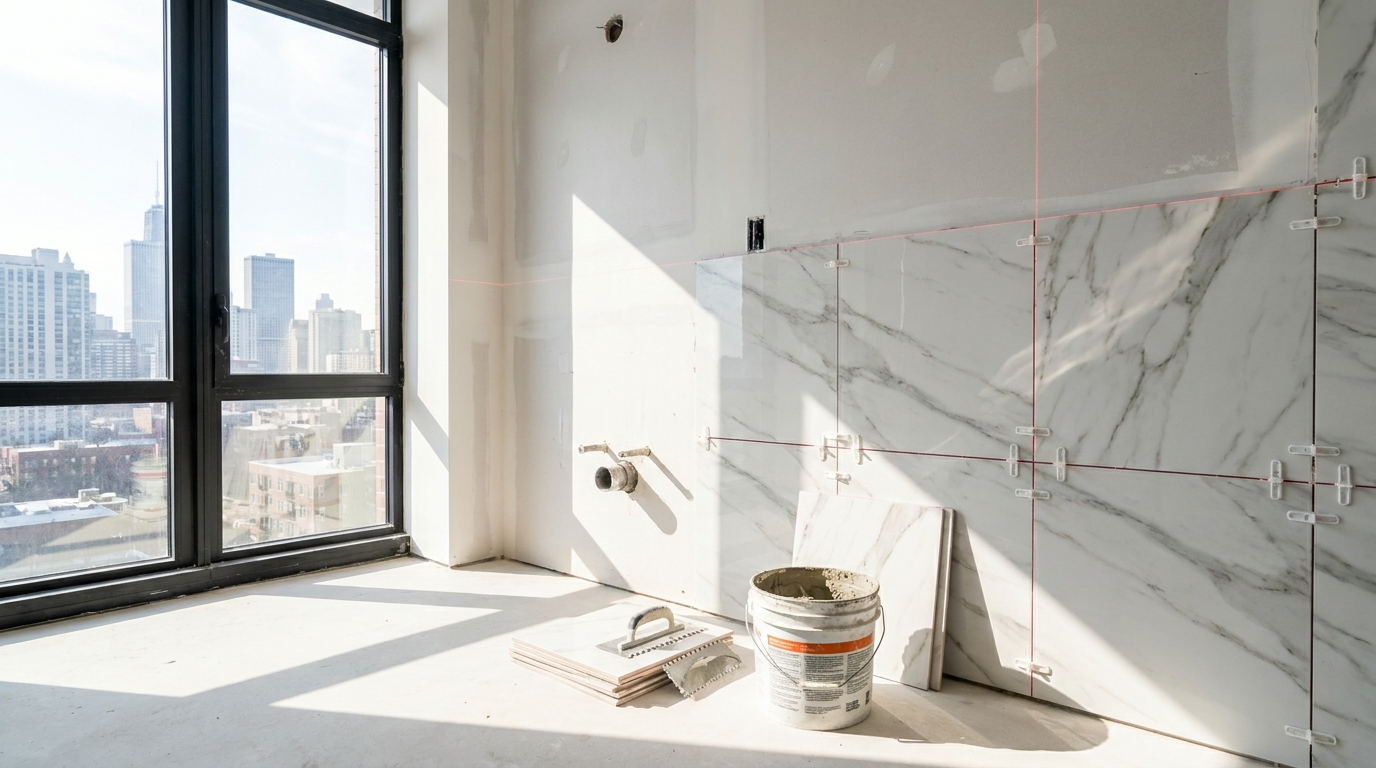
Tile installation (3–7 days). Floors, shower walls, niches and any accent work, followed by grouting. Large-format tile, herringbone and mosaic patterns, and natural stone all take longer to set than a simple straight lay. Thinset and grout curing add unavoidable waiting days between steps.
Vanity, fixtures and finish plumbing (2–4 days). Cabinetry, countertop, sink, toilet, faucets, trim and lighting go in once the tile is set.
Shower glass (1–3 weeks after templating). Custom glass usually cannot be measured until the tile is finished, and then it has to be fabricated. This is the classic reason a bathroom looks “done” but is not quite usable yet.
Paint, final inspection and punch list (2–4 days). Caulking, touch-ups, hardware, cleanup and the small corrections that turn a finished bathroom into a properly finished one.
What Makes a Chicago Bathroom Remodel Take Longer
Some of the biggest schedule variables here are specific to the city and its housing stock.
Permits and inspections. Replacing fixtures in place is usually straightforward, but moving plumbing or altering electrical typically brings permitting into the picture, and inspections have to be scheduled around the trades. Building this into the plan up front is far less painful than discovering it mid-project.
Condo and HOA rules. Many Chicago buildings restrict work hours, require certificates of insurance, limit noisy work to weekdays, and require freight elevator reservations for deliveries and debris. A high-rise bathroom can easily run a week longer than an identical bathroom in a single-family home purely because of building logistics.
Older homes. Bungalows, two-flats and greystones frequently hide plaster over lath, cast-iron drain lines, undersized or cloth-wrapped wiring, and framing that is not where a tape measure says it should be. None of this is a disaster, but it is the most common source of mid-project change orders and added days.
Winter. Deliveries slow down in January and February, and alley access, parking and dumpster placement get complicated once snow is on the ground.
Mid-project changes. Switching tile after demolition has started, or deciding to move the shower once walls are open, resets parts of the schedule and often the budget too. If cost is on your mind at the same time, it is worth reading which elements drive spending in the most expensive part of a bathroom remodel before you finalize the plan.
Cosmetic Refresh vs. Full Gut: Two Very Different Schedules
The gap between a week and six weeks comes down to one question: are you changing what is behind the walls?
A cosmetic update leaves plumbing, electrical and usually the tile in place. Swapping a vanity, mirror, light fixture and paint transforms how a bathroom feels and can be finished inside a week, often without permits and without the bathroom being unusable the entire time.
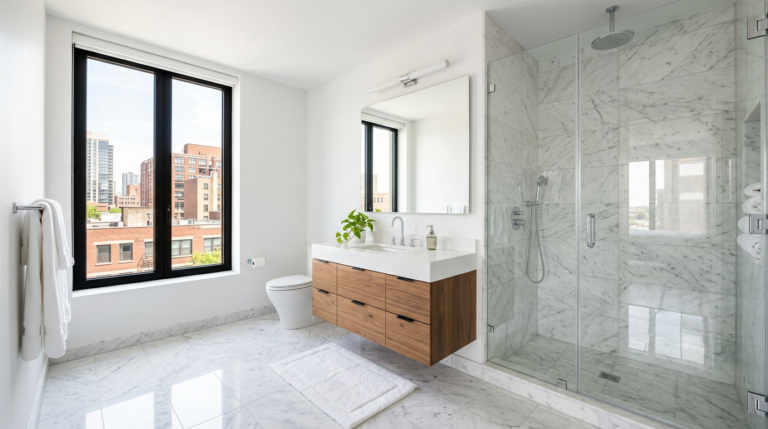
A full gut removes everything down to the studs and subfloor. That opens up genuinely better outcomes — a curbless shower, a proper niche, heated floors, a layout that finally makes sense — but it also introduces waterproofing, inspections, curing time and custom glass. Both are legitimate choices; they simply belong to different calendars, and it is worth being clear about which project you are actually starting.
How to Keep Your Remodel on Schedule
A handful of habits account for most of the difference between projects that finish on time and projects that drift.
- Finalize every selection before demolition day. Tile, grout color, vanity, countertop, faucet, lighting, hardware — all of it. An undecided detail turns into a stopped job later.
- Order long-lead items first. Custom cabinetry, natural stone slabs and specialty fixtures set the start date, not the other way round.
- Order extra tile. Running short mid-installation means waiting on a reorder, and dye lots do not always match.
- Confirm building requirements early. Insurance certificates, approved work hours and elevator bookings take days to arrange, not minutes.
- Resist mid-project changes. Each one ripples through the sequence.
- Build in a buffer. Adding 10–20% to whatever timeline you are given absorbs the surprises that older buildings reliably produce.
FAQ
Can a bathroom be remodeled in a week?
A cosmetic refresh can be. Replacing a vanity, mirror, light fixture, toilet and paint is realistic within a week. A full remodel involving tile, waterproofing and any plumbing work cannot honestly be compressed that far, because curing times and inspections do not speed up no matter how many people are on site.
How long will I be without the bathroom?
Assume the bathroom is out of service for essentially the whole on-site period — two to three weeks for a typical full remodel, longer for a gut. If it is the only bathroom in the home, that is worth planning around before work starts.
Does moving the plumbing add much time?
Yes, usually meaningfully. Relocating a toilet, shower drain or vanity means opening floors or walls, rerouting supply and waste lines, and in most cases a permit and inspection. Keeping fixtures in their existing positions is the single most effective way to hold both the schedule and the budget down.
Why does the shower glass arrive so late?
Because it is made to fit. Accurate measurements can only be taken once the tile is installed and set, and fabrication then takes one to three weeks depending on the shop and the complexity of the enclosure. Many otherwise finished bathrooms are simply waiting on glass.
How much does a bathroom remodel cost in Chicago?
Pricing is individual and depends on the size of the room, the scope of work, the materials you choose and the condition of what is behind the walls. Rather than working from an average, request a personalized quote so the numbers reflect your actual bathroom.
Get a Free Quote
A realistic timeline is one of the most useful things you can have before starting, because it lets you plan around the disruption rather than be surprised by it. Every bathroom is different, and the only way to know how long yours will take — and what it will cost — is to have someone look at the actual space, the layout you want and the building you are in. Request a free quote and we will walk through the scope, the schedule and the options with you.