Marble Restoration: Reviving Dull, Scratched & Etched Stone
Marble has a way of making a room feel finished. It shows up on Chicago kitchen countertops, bathroom vanities, entryway floors and shower surrounds — and when it is in good condition, very little else looks quite like it. But marble is a soft, porous, calcium-based stone, and after years of daily use it starts to show its age: a countertop loses its reflection, a hallway floor develops a haze of fine scratches, a vanity picks up cloudy rings where a bottle of cleaner once sat. The encouraging part is that almost all of this damage lives in the top fraction of a millimeter of stone. Natural stone restoration removes that damaged layer and brings the original surface back, usually for far less disruption and expense than tearing the stone out. If you are weighing your options, our natural stone restoration services in Chicago are built around exactly this kind of work.
Why Marble Loses Its Shine
Marble is metamorphosed limestone, which means it is chemically calcium carbonate. That single fact explains most of what goes wrong with it. Calcium carbonate reacts with acid, so anything acidic that touches the surface — lemon juice, wine, coffee, tomato sauce, vinegar, many general-purpose bathroom cleaners — dissolves a microscopic amount of stone on contact. The result is a dull spot with a slightly rough texture, called an etch.
Marble is also relatively soft compared with granite or quartzite. Grit tracked in on shoes acts like sandpaper on floors, and over a Chicago winter of salt, slush and sand, an entryway can take a remarkable amount of abrasion. On countertops, sliding heavy cookware and ceramic dishes leaves the same kind of micro-scratching. Individually those scratches are invisible; collectively they scatter light and the polish looks tired.
Finally, marble is porous. Without an effective sealer, oils and pigmented liquids can migrate below the surface and darken the stone from within. That is a stain, and it behaves very differently from an etch — which brings us to the most useful distinction in this whole subject.
Etching, Scratching and Staining: Three Problems, Three Fixes
Homeowners often lump all marble damage together, but identifying which one you are looking at determines what the fix should be.
- Etching is a change in the surface finish, not the color. It usually looks lighter or duller than the surrounding stone and you can often feel a slight difference in texture. Etches are corrected mechanically, by re-abrading and re-polishing the surface.
- Scratching is physical abrasion. Light scratches disappear during polishing; deeper gouges need honing with progressively finer abrasives before the polish is restored.
- Staining is discoloration from something absorbed into the stone. It usually appears darker than the surrounding marble. Stains are drawn out chemically with a poultice matched to the substance — oil, rust, organic material and ink all respond to different treatments.
A practical test: if the mark is lighter and dull, it is almost certainly an etch. If it is darker, it is probably a stain. Getting this right matters, because polishing will not remove a stain and a poultice will not fix an etch.
What Natural Stone Restoration Actually Involves
Professional marble restoration is essentially controlled resurfacing. In broad terms, the process moves through a few stages, with the starting point depending on how much damage the stone has.
Grinding is the most aggressive step and is reserved for floors with lippage — uneven tile edges — or serious damage. It flattens the surface across the whole installation.
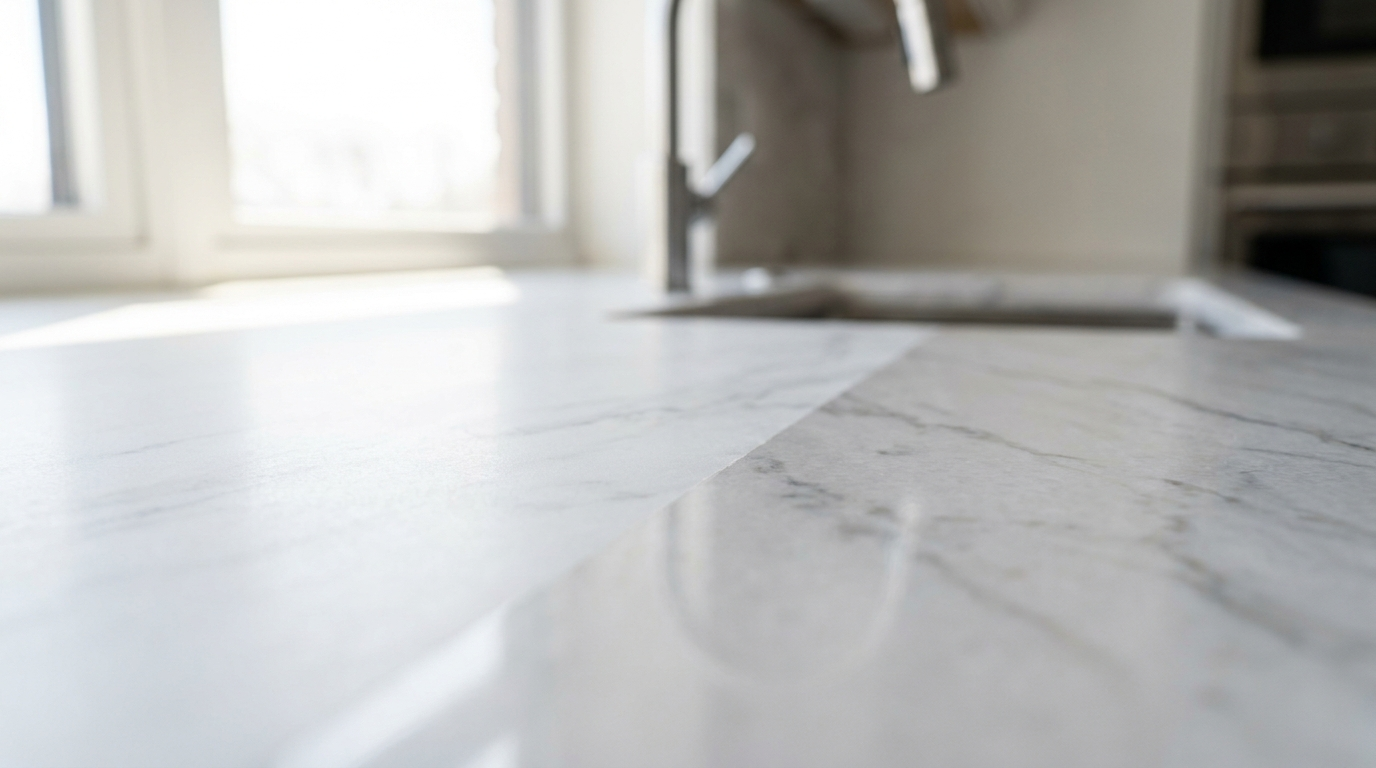
Honing uses a sequence of diamond abrasives, from coarse to fine, to remove scratches, etches and worn material. Each pass erases the scratch pattern left by the previous one. Honing alone produces a soft matte finish, which is a legitimate final look and one many Chicago homeowners choose deliberately, because a honed surface hides future etching far better than a polished one.
Polishing continues with very fine abrasives or polishing compounds until the stone develops a reflective finish. On marble, that reflection comes from the density of the stone itself rather than from a coating, which is why a properly polished marble surface can be renewed again years later.
Sealing finishes the job. A penetrating impregnating sealer sits below the surface and slows absorption, buying time to wipe up spills before they stain. It is worth being clear about what sealer does and does not do: it helps with staining, but no sealer makes marble acid-proof, so etching remains a matter of care rather than chemistry.
Where Marble Restoration Makes the Biggest Difference
Entryways and hallway floors. These take the worst of Chicago weather. Road salt is particularly hard on calcium-based stone, and a foyer that has been through several winters often shows a dull, traffic-shaped path down the middle. Restoring the floor typically produces the most dramatic before-and-after of any surface in the house.
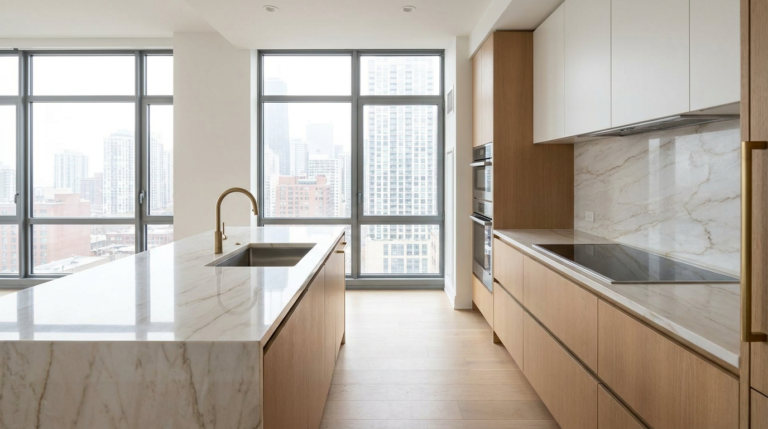
Kitchen countertops and islands. Marble counters live surrounded by acids. Etching around the sink, the coffee station and the prep area is normal, not a defect. Resurfacing brings the whole slab back to a consistent finish, and many homeowners take the opportunity to switch from polished to honed at the same time.
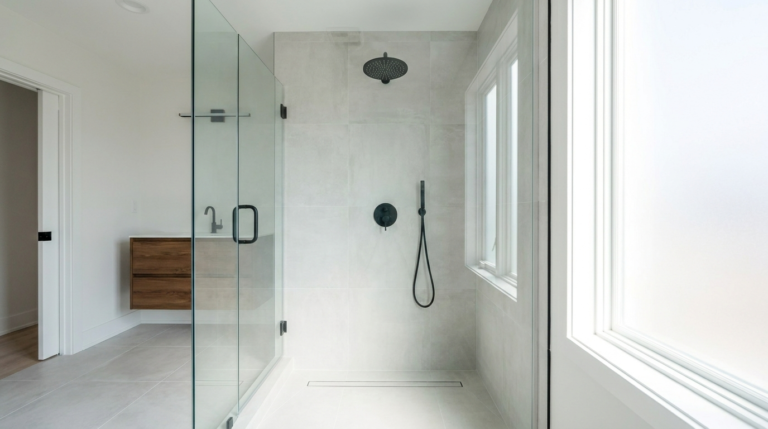
Bathroom vanities and shower surrounds. Here the culprits are usually hard-water deposits, soap scum and acidic cleaners. Mineral buildup can also mask the stone underneath, so the marble often looks better than expected once it is cleaned and resurfaced.
Fireplace surrounds, thresholds and windowsills. Smaller pieces are easy to overlook, but restoring them alongside a larger project keeps the marble throughout a home reading as one consistent material.
Restore or Replace? How to Decide
Restoration is worth considering first whenever the stone is structurally sound. Surface wear, etching, scratches, dull spots and most staining are all correctable, and because the process removes only a whisper of material, a marble installation can generally be restored several times over its life.
Replacement makes more sense when the stone is cracked through, when tiles are loose or the substrate beneath has failed, when the marble has been so heavily worn that little thickness remains, or simply when you no longer want that material and are changing the design of the room. In that case, new fabrication becomes the conversation — our natural stone and quartz fabrication work covers slab selection, templating and installation for exactly those projects.
There is also a middle path worth mentioning: restoring the marble you have in the rooms where it still works, and replacing it only where the design is genuinely changing. Pricing for either route is individual and depends on the amount of surface area, the type and depth of damage, the finish you want and site conditions, so the sensible next step is a personalized quote rather than a number from an article.
Keeping Marble Looking Good Afterward
Restoration resets the surface; habits determine how long the result lasts. Use a pH-neutral stone cleaner rather than vinegar, bleach or general bathroom sprays. Blot acidic spills immediately instead of wiping them across the surface. Put coasters under bottles and glasses, and use a cutting board rather than the counter. On floors, mats at every exterior door catch the grit and salt that do most of the damage, and regular dust-mopping keeps that grit from being ground underfoot.
Test the sealer occasionally by leaving a few drops of water on the stone for several minutes: if the marble darkens, it is time to reseal. For a fuller walk-through of day-to-day care, see our guide on how to care for natural stone countertops and floors.
FAQ
Can etched marble really be repaired, or do I have to live with it?
Etches are repairable. Because an etch is a change to the surface finish rather than damage running deep into the slab, re-honing and re-polishing that area — or the whole surface, for an even result — removes it. Very light etching sometimes responds to a marble polishing compound; widespread or deeper etching is better handled as a full resurfacing so the finish stays consistent.
How much does natural stone restoration cost in Chicago?
Pricing is individual. It depends on square footage, the type of stone, how much damage there is, whether grinding is needed to flatten a floor, the finish you want and access to the space. Request a personalized quote so the estimate reflects your actual surfaces rather than an average.
How often should marble be restored?
It varies enormously with use. A busy marble entryway or a heavily used kitchen counter may benefit from resurfacing every few years, while a guest bathroom vanity can go a decade or more. Sealing is a shorter cycle — often every one to three years depending on the sealer and the wear — and good daily care stretches both intervals considerably.
Is marble restoration messy or disruptive to the house?
Modern stone restoration is generally done as a wet process with vacuum recovery, which keeps dust down considerably compared with dry grinding. The affected room is normally out of use during the work and for a short curing period afterward, but the rest of the home stays usable. Ask your contractor what to expect for your specific rooms when you request a quote.
Does restoration work on other stones besides marble?
Yes. The same family of techniques applies to travertine, limestone, terrazzo, onyx and granite, though the abrasives, sequence and expectations differ by material. Granite is much harder and holds a polish far longer; travertine and limestone are softer and share marble’s sensitivity to acid.
Get a Free Quote
If your marble looks dull, scratched or blotchy, it is very likely still a good surface underneath. Natural stone restoration is one of the highest-impact, lowest-disruption improvements available to a Chicago home — and in most cases the stone you already own is worth reviving rather than replacing. Request a free quote and we will look at your floors, counters or bathroom and recommend the right approach for the condition of your stone.