How to Care for Natural Stone Countertops & Floors
Natural stone brings warmth, character, and lasting value to a Chicago home – but marble, granite, travertine, and limestone will only look their best if you care for them the right way. Good natural stone maintenance isn’t complicated, and it doesn’t take much time each week, yet the payoff is huge: countertops and floors that stay glossy, stain-free, and sealed against Chicago’s freeze-thaw seasons for decades. This guide walks through the day-to-day habits, the periodic upkeep, and the professional treatments that keep your natural stone looking as good as the day it was installed.
Why Natural Stone Care Matters
Natural stone is beautiful because it’s porous – those tiny openings are what give marble its luminous depth and granite its rich color. But porosity also means liquids, acids, and grit can work their way into the surface if the stone isn’t protected. Without proper natural stone maintenance, you can end up with dull spots where lemon juice sat, oil stains near the cooktop, and micro-scratches from everyday dust on a foyer floor.
The good news: routine care is straightforward. A soft cloth, a pH-neutral cleaner, and a periodic sealer are enough for most surfaces. The catch is doing it consistently. In Chicago’s climate, where humidity swings hard between winter heating and summer storms, stone benefits from a little extra attention on both sealing and cleaning schedules.
Everyday Cleaning: What to Do (and What to Avoid)
Daily and weekly cleaning is the foundation of everything else. For countertops, wipe up spills as soon as they happen – coffee, wine, and citrus juice can etch or stain if they linger. Use a soft microfiber cloth with warm water and a few drops of pH-neutral stone cleaner, then dry the surface to prevent water spots.
What to avoid is just as important:
- Skip vinegar, lemon, ammonia, bleach, and all-purpose sprays. These are acidic or highly alkaline and will etch marble or dull granite sealer over time.
- Don’t use abrasive powders, scouring pads, or “magic” erasers – they can scratch the polish.
- Never drag pots, appliances, or ceramics across a stone surface. Use trivets, cutting boards, and felt pads under decorative pieces.
For floors, sweep or dust-mop daily to remove grit before it acts like sandpaper underfoot. Damp-mop weekly with the same neutral cleaner, changing water often so you aren’t spreading dirt.
Sealing Natural Stone: How and How Often
Sealing is the single most important part of natural stone maintenance. A quality penetrating sealer soaks into the pores and slows liquids from working their way in, giving you extra time to wipe up spills before they stain. Sealers do not create a coating and won’t change the look of your stone.
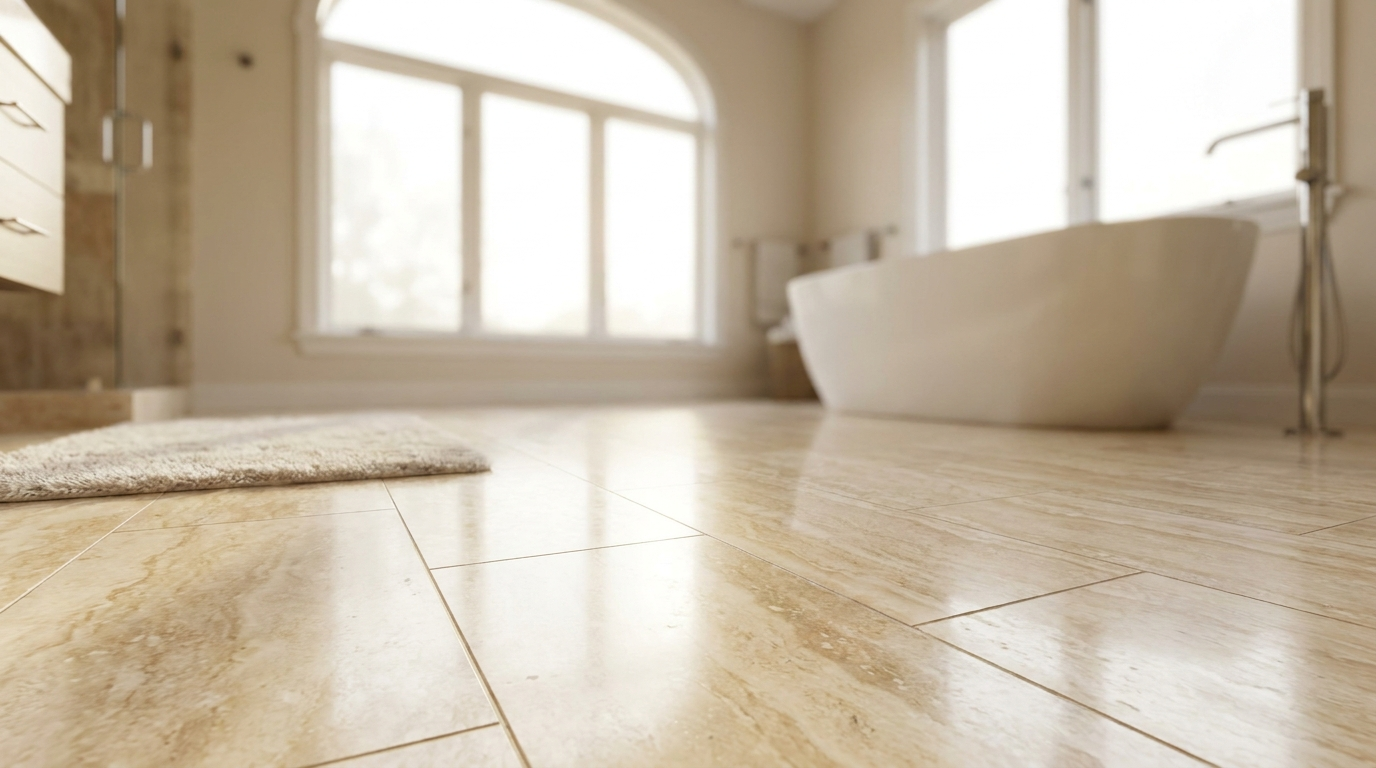
How often depends on the material and traffic. Granite countertops typically need resealing about once a year. Marble and limestone are softer and more porous, so many kitchens do best with a fresh seal every 6 to 12 months. Travertine and slate floors often benefit from resealing every 1 to 3 years.
An easy at-home test: sprinkle a few drops of water on the stone and wait 10 minutes. If the water beads, the seal is fine. If it soaks in and leaves a dark spot, it’s time to reseal. Apply sealer to a clean, fully dry surface, follow the manufacturer’s directions, and buff off any residue.
Caring for Natural Stone Floors
Floors take more abuse than countertops, and Chicago’s snowy winters make it worse. Slush, road salt, and ice-melt chemicals will scar polished stone if they sit – so keep a walk-off mat at every entry and encourage shoes-off at the door during salt season. Blot away wet spots immediately.
For deeper cleaning, use a mop dedicated to stone, a neutral cleaner, and clean water. Steam mops are best avoided on marble and travertine – the heat and moisture can loosen grout and, over years, dull the finish. If your floors see heavy pet traffic, consider an impregnating sealer with an enhancer, which adds a subtle stain barrier without changing the natural look.
Any grout haze, buildup, or dulling along traffic lanes is a sign the floor is ready for professional cleaning or a light polish.
Handling Stains, Etches, and Scratches
Even well-maintained stone gets the occasional battle scar. The trick is knowing what you can DIY and what needs a pro.
- Oil or organic stains: a poultice (a paste of baking soda and water, or a commercial stone poultice) draws the stain out over 24 to 48 hours.
- Water rings: often fade on their own; if not, a poultice usually clears them.
- Light etch marks on marble: a marble polishing powder gently buffs out most surface etching from acidic spills.
- Scratches or deep etches: leave these to a professional – trying to hand-polish deeper damage often makes it worse.
For anything beyond a minor stain – dulled polish, chipped edges, cracked tiles – call in help before it spreads. A one-time restoration is far cheaper than replacing a slab.
When to Bring in a Professional
Every three to five years, most natural stone benefits from a professional refresh. That might mean deep cleaning, honing to remove wear patterns, polishing to restore reflection, or sealing with a commercial-grade product that lasts far longer than DIY options. In a busy Chicago home, professional care extends the life of your investment and often costs a fraction of replacement.
If you’re not sure whether your stone needs work, a quick assessment by a specialist can tell you. Our team offers natural stone maintenance across the Chicago area, and if you’re planning a new install or replacement slab, our natural stone and quartz fabrication shop can match the finish and edge profile of your existing pieces. Pricing is always individual and depends on the scope – request a personalized quote for an accurate number.
FAQ
How often should natural stone be sealed?
Most granite countertops do well with a resealing about once a year, while softer stones like marble and limestone often benefit every 6 to 12 months. Floors made of travertine, slate, or limestone typically go 1 to 3 years between seals. A quick water-drop test is the easiest way to know: if water soaks in instead of beading, it’s time to reseal.
What cleaner should I use on natural stone?
Stick with a pH-neutral cleaner made for stone or a few drops of mild dish soap in warm water. Avoid vinegar, lemon, bleach, ammonia, and general-purpose sprays – even “safe” bathroom cleaners can etch marble or degrade granite sealer over time.
Can I use vinegar on marble or granite?
No. Vinegar is acidic and will etch marble almost immediately, leaving a dull spot. It also breaks down sealer on granite and other stones. Use a stone-safe pH-neutral cleaner instead.
How do I remove an etch mark from marble?
Light etches on polished marble can often be buffed out with a marble polishing powder made for the job. Deeper etches, dull patches over larger areas, or etches on honed marble usually need a professional to hone and re-polish the surface.
Get a Free Quote
Whether your marble island needs a polish, your travertine floor could use resealing, or you’re planning a full restoration before selling your Chicago home, our team is here to help. We start with a real look at the stone, walk you through the right maintenance plan, and prepare a personalized quote based on the exact scope – no fixed-price guesswork. Reach out today for a free consultation and let’s bring your natural stone back to its best.