Tub-to-Shower Conversion in Chicago: What to Know Before You Start
If you have a bathtub you never actually use, you’re not alone — and turning it into a walk-in shower is one of the most popular bathroom upgrades in Chicago. A tub-to-shower conversion opens up the room, improves everyday comfort and safety, and gives a dated bathroom a fresh, modern look. Here’s what to consider before you start, what the project typically involves, and how to decide if it’s the right move for your home.
Why Chicago homeowners convert a tub to a shower
Many bathrooms in Chicago’s classic bungalows, two-flats, and mid-century homes were built with a single tub-shower combo. That made sense decades ago, but priorities have changed. A few reasons converting a tub into a shower is so popular right now:
- Daily practicality. If everyone in the house showers rather than bathes, the tub is simply wasted space.
- Safety and accessibility. Stepping over a high tub wall can be a real fall risk, especially for older adults. A low-threshold or curbless shower removes that hazard.
- A bigger, brighter feel. Replacing a bulky tub with a glass-enclosed shower can make even a small bathroom feel noticeably larger.
- Resale appeal. As long as the home keeps at least one bathtub, buyers often favor a spacious walk-in shower in the main bathroom.
If you’re still weighing your options, our comparison of a bathtub vs. walk-in shower goes deeper on the pros and cons of each.
What a tub-to-shower conversion involves
Every bathroom is different, but a conversion generally moves through a few key stages: removing the old tub and surround, adjusting the plumbing for a shower, waterproofing, installing the shower base and walls or tile, fitting the fixtures and glass, and finishing with grout and sealing. Of all these stages, waterproofing and quality tile work matter most — they’re what protect your home and keep the shower looking great for years. Because so much depends on that craftsmanship, a tub-to-shower conversion is best handled by an experienced tile and natural stone installation team.
How much does a tub-to-shower conversion cost?
There’s no one-size-fits-all price — every conversion is quoted individually because the cost depends on your specific bathroom and choices. The biggest factors include:
- Materials. Tile, natural stone, acrylic, and solid-surface options all sit at different price points and offer a different look and lifespan.
- Plumbing changes. Keeping the existing layout is more economical than relocating the drain or valve.
- Glass enclosure. A frameless glass panel is a different investment than a framed door or curtain.
- Condition behind the tub. If there’s hidden water damage to repair, that affects scope.
The most reliable way to understand your cost is a personalized, itemized quote based on your bathroom — not a generic figure. For a wider view of where budget goes in a bathroom project, see our guide to the most expensive part of a bathroom remodel.
How long does a conversion take?
Timelines vary with the scope. A simple swap can move quickly, while a fully custom tiled shower takes longer because tile, thin-set, and grout each need time to cure properly before the next step. It’s worth being cautious with “one-day” conversion offers: they can suit basic prefabricated systems, but a durable, custom-tiled shower generally can’t be waterproofed, tiled, and cured correctly in a single day. Rushing the cure time is one of the more common causes of leaks later on.
Walk-in vs. curbless shower options
Once you’ve decided to convert, the next choice is the threshold:
- Low-threshold walk-in shower. A short curb keeps water contained and works in almost any bathroom. It’s the most common and budget-friendly choice.
- Curbless (zero-entry) shower. The floor flows straight into the shower with no lip to step over. It’s the most accessible and the most modern-looking option, ideal for aging-in-place, though it calls for careful floor sloping and waterproofing.
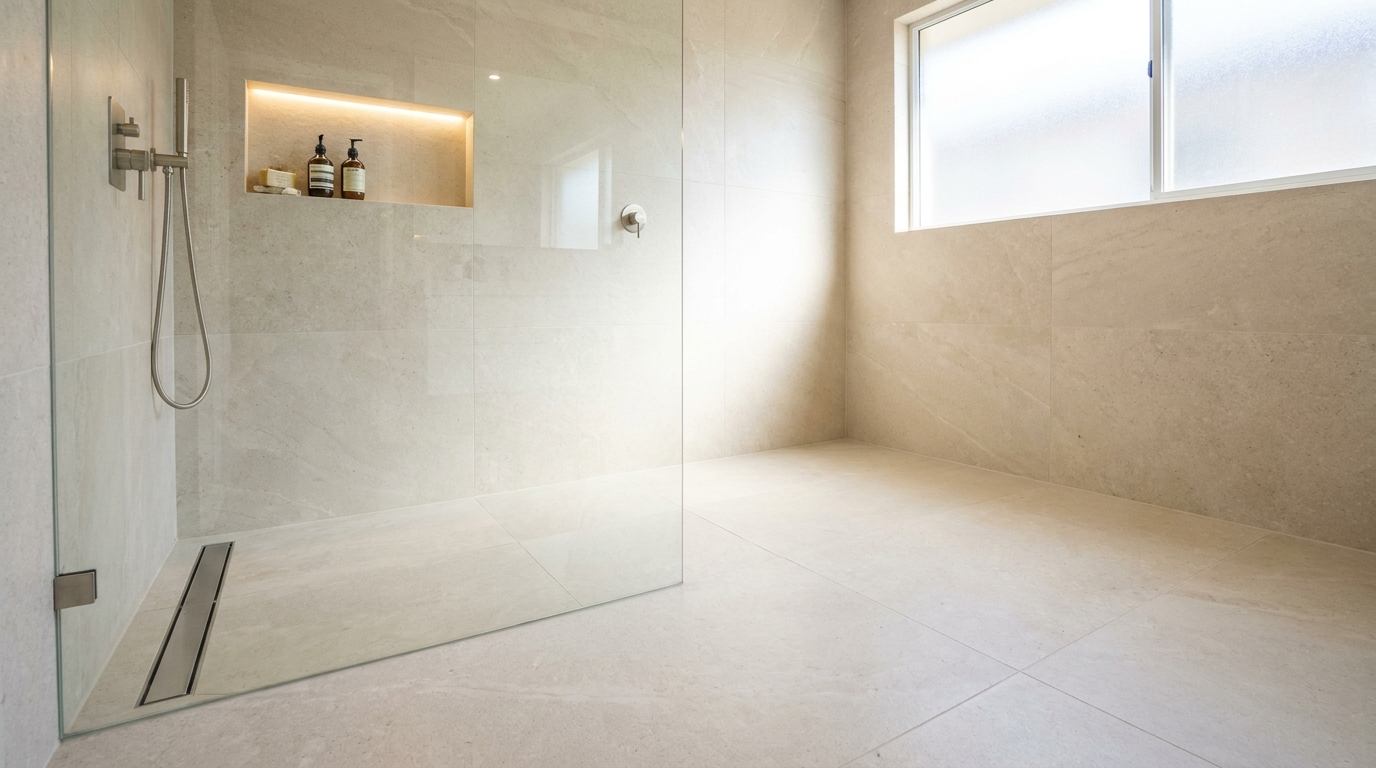
Both options pair beautifully with a frameless glass panel, a built-in niche, and a bench if space allows.
Is a conversion right for your bathroom?
A tub-to-shower conversion is usually a strong choice if you have more than one bathroom in the home (keeping at least one tub is smart for resale and for anyone who bathes young children), if the current tub goes unused, or if safety and easy access are becoming a priority. If it’s your only bathroom and you regularly take baths, it’s worth talking through first. A consultation is the best way to look at your layout and goals and get clear, tailored advice.
FAQ
How much does a tub-to-shower conversion cost?
It varies from project to project. Pricing is individual and depends on materials, plumbing changes, glass, and the condition of your existing bathroom, so the best step is a personalized quote.
How long does a tub-to-shower conversion take?
It depends on the scope. A basic conversion is faster, while a custom tiled shower takes longer because the materials need proper curing time. Be cautious of “one-day” promises for fully tiled showers.
Will removing my bathtub hurt my home’s resale value?
Generally no, as long as the home keeps at least one bathtub. Many buyers prefer a spacious walk-in shower in the main bathroom.
What’s the difference between a walk-in and a curbless shower?
A walk-in shower has a low curb to contain water; a curbless shower has a zero-threshold entry with no lip to step over, which is more accessible and modern but needs precise sloping and waterproofing.
Can any bathroom be converted?
Most can, but the ideal approach depends on your plumbing layout and space. That’s something best assessed during a consultation.