Small Bathroom Remodel in Chicago: Smart Ideas, Layout & Cost
A small bathroom remodel is one of the most rewarding projects a Chicago homeowner can take on. The room is compact, so every upgrade — new tile, a smarter layout, better lighting — has an outsized impact on how the space looks and feels. But small bathrooms also leave little margin for error. A poor layout choice or the wrong fixture can make an already tight room feel even smaller.
This guide walks through the ideas, layout decisions, materials, and realistic costs behind a successful small bathroom renovation, with practical advice for the older homes, condos, and two-flats common across Chicago. If you are ready to plan a bathroom remodel in Chicago, here is what matters most when space is limited.
Start With Layout, Not Finishes
The biggest mistake homeowners make in a small bathroom redesign is choosing tile and fixtures before solving the layout. In a compact room, layout is everything — it determines whether the space feels open or cramped long before the finishes go in.
Before anything else, decide whether the current footprint works. Often the toilet, sink, and shower can stay in place, which keeps plumbing costs down and speeds up the project. But sometimes a small move — shifting the sink a few inches, swapping a swinging door for a pocket door, or replacing a bulky vanity with a wall-mounted one — frees up just enough room to transform the feel of the bathroom.
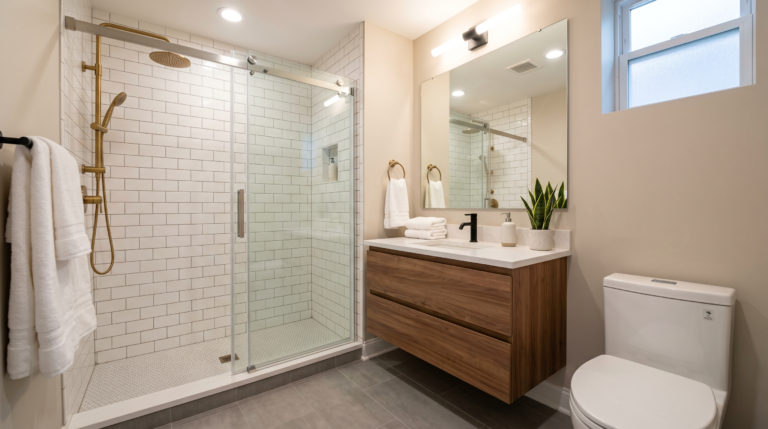
Keep the visual path through the room as open as possible. A clear sightline from the doorway across the floor makes a small bathroom read as larger. That is why floating vanities, frameless glass, and wall-hung toilets are so popular in small bathroom remodels: they keep the floor visible, and visible floor space tricks the eye into perceiving more room.
Tub or Walk-In Shower in a Small Bathroom?
This is the central question in most small bathroom renovations, and the answer depends on how the room is used.
In a tight space, replacing a bulky tub with a walk-in shower almost always makes the room feel larger and more modern. A curbless or low-threshold shower with a glass panel keeps the layout open and is far easier to clean. For a primary bathroom used mostly by adults, this is usually the better choice.
That said, do not remove every tub in the home without thinking it through. If this is the only bathroom, or a family bathroom used by children, keeping a compact tub-shower combination may be the smarter long-term decision — and many buyers still expect at least one tub in the house. A small bathroom remodel with a tub is entirely doable; the key is choosing a space-efficient model and a shower-over-tub setup rather than separate fixtures.
Design Tricks That Make a Small Bathroom Feel Bigger
A few proven choices consistently make small bathrooms feel more open:
- Large-format tile. Fewer grout lines create a seamless, continuous surface that visually expands the room. The same tile carried from floor up the shower wall reinforces the effect.
- Light, consistent color palette. Soft whites, warm neutrals, and pale stone tones reflect light. Saving bold color for a single accent — one wall, a vanity, a niche — keeps the room from feeling busy.
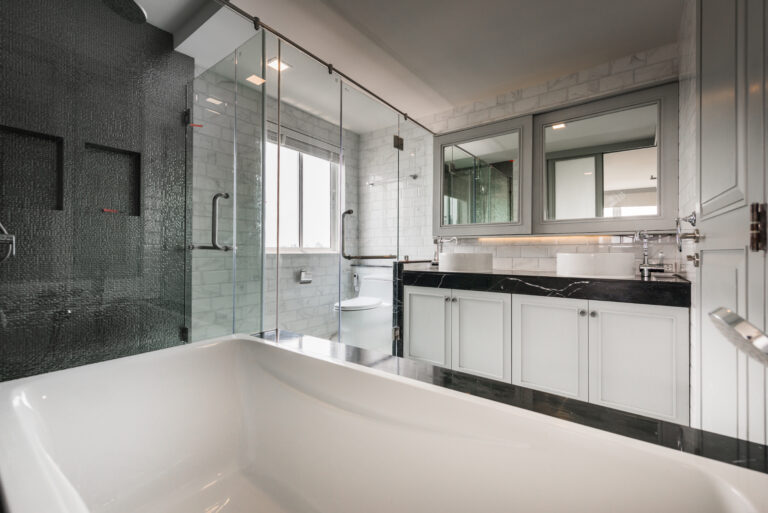
- Frameless glass instead of a curtain or framed enclosure. Glass lets light pass through and keeps the shower from chopping the room into segments.
- A floating vanity and wall-hung toilet. Keeping fixtures off the floor exposes more floor surface and makes cleaning easier.
- Layered lighting. A single overhead fixture casts shadows that shrink a room. Adding task lighting at the mirror and recessed or accent lighting brightens corners and makes the whole space feel larger.
- A large mirror. Extending the mirror across the full width of the vanity wall effectively doubles the perceived space.
Storage Solutions for Tight Spaces
Storage is where small bathroom remodels are won or lost. Clutter on every surface makes a compact room feel chaotic, so the goal is to build storage into the design without eating into floor space.
Recessed niches in the shower wall add storage without protruding into the room. A medicine cabinet set flush into the wall does the same above the sink. Vanities with drawers organize daily items better than open shelving, and a tall, narrow cabinet uses vertical space that would otherwise go to waste. In Chicago’s older homes, the space between wall studs can often be opened up for recessed shelving — a detail an experienced contractor will spot during planning.
Tile and Materials That Last
In a small bathroom, tile work is both the dominant visual element and the part most exposed to water, so quality matters more than square footage might suggest. Proper waterproofing behind the tile, a correctly sloped shower base, and precise installation are what separate a bathroom that looks great for a decade from one that fails in two years.
Porcelain and ceramic tile remain the most practical choices for floors and shower walls — durable, water-resistant, and easy to maintain. Natural stone adds a premium look but needs sealing and more upkeep. Whatever you choose, professional tile installation is critical in a wet area; small mistakes in slope or waterproofing lead to leaks that are expensive to fix later.
How Much Does a Small Bathroom Remodel Cost?
Small bathroom remodel cost varies widely depending on scope, materials, and how much the layout changes. As a general framework:
- Cosmetic refresh (new tile, fixtures, paint, same layout): the most budget-friendly option, since plumbing stays in place.
- Mid-range renovation (new shower or tub, vanity, tile, lighting, minor layout tweaks): the most common small bathroom remodel.
- Full gut renovation (moving plumbing, reconfiguring layout, premium materials): the highest investment, but often necessary in older Chicago homes with outdated plumbing or water damage behind the walls.
The single biggest cost drivers are labor, the shower/tub area, and any change to the plumbing layout. Keeping fixtures in their existing positions is the most effective way to control the budget. Because every bathroom and home is different, the most reliable way to understand your cost is an in-person assessment — hidden conditions in older homes (old pipes, uneven floors, moisture damage) often only reveal themselves once work begins, which is why a contingency of 10–15% is wise.
Why Work With a Local Chicago Specialist
Small bathrooms are unforgiving, and Chicago’s housing stock adds its own challenges — century-old bungalows with uneven floors, condos with shared plumbing, and stricter city building codes than many suburbs. An experienced local contractor knows how to handle these conditions, pull the right permits, and waterproof correctly the first time.
At PM Tile, we have completed hundreds of bathrooms across Chicago over more than 25 years. From the first consultation through design, tile installation, and final detailing, we focus on durable, precise work that makes small spaces look and function their best.
FAQ
How long does a small bathroom remodel take?
Most small bathroom renovations take a few weeks, depending on scope. A cosmetic refresh is faster, while a full gut renovation that moves plumbing takes longer. Material lead times and permit timelines can extend the schedule, so plan ahead.
Is it cheaper to remodel a small bathroom?
A small bathroom uses less material and tile than a large one, which helps. But cost per square foot is often higher because the same specialized work — waterproofing, plumbing, tiling — is packed into a tighter space. Keeping the existing layout is the most effective way to keep a small bathroom remodel affordable.
Should I put a tub or a walk-in shower in a small bathroom?
In most small bathrooms, a walk-in shower makes the room feel larger and more modern. But if it is your only bathroom or a family bathroom, a compact tub-shower combination may be the better long-term choice. The right answer depends on who uses the room and how.
Can a small bathroom be fully gutted and reconfigured?
Yes. Even a small bathroom can be completely reconfigured, including moving plumbing fixtures. This costs more than a cosmetic update but is often worth it in older homes where the existing layout is inefficient or the plumbing needs updating anyway.
What makes a small bathroom look bigger?
Large-format tile, a light and consistent color palette, frameless glass, a floating vanity, a large mirror, and layered lighting all make a small bathroom feel more open by maximizing visible floor space and reflected light.